

Remodeling Whole House: Top 5 Dream Costs in 2025

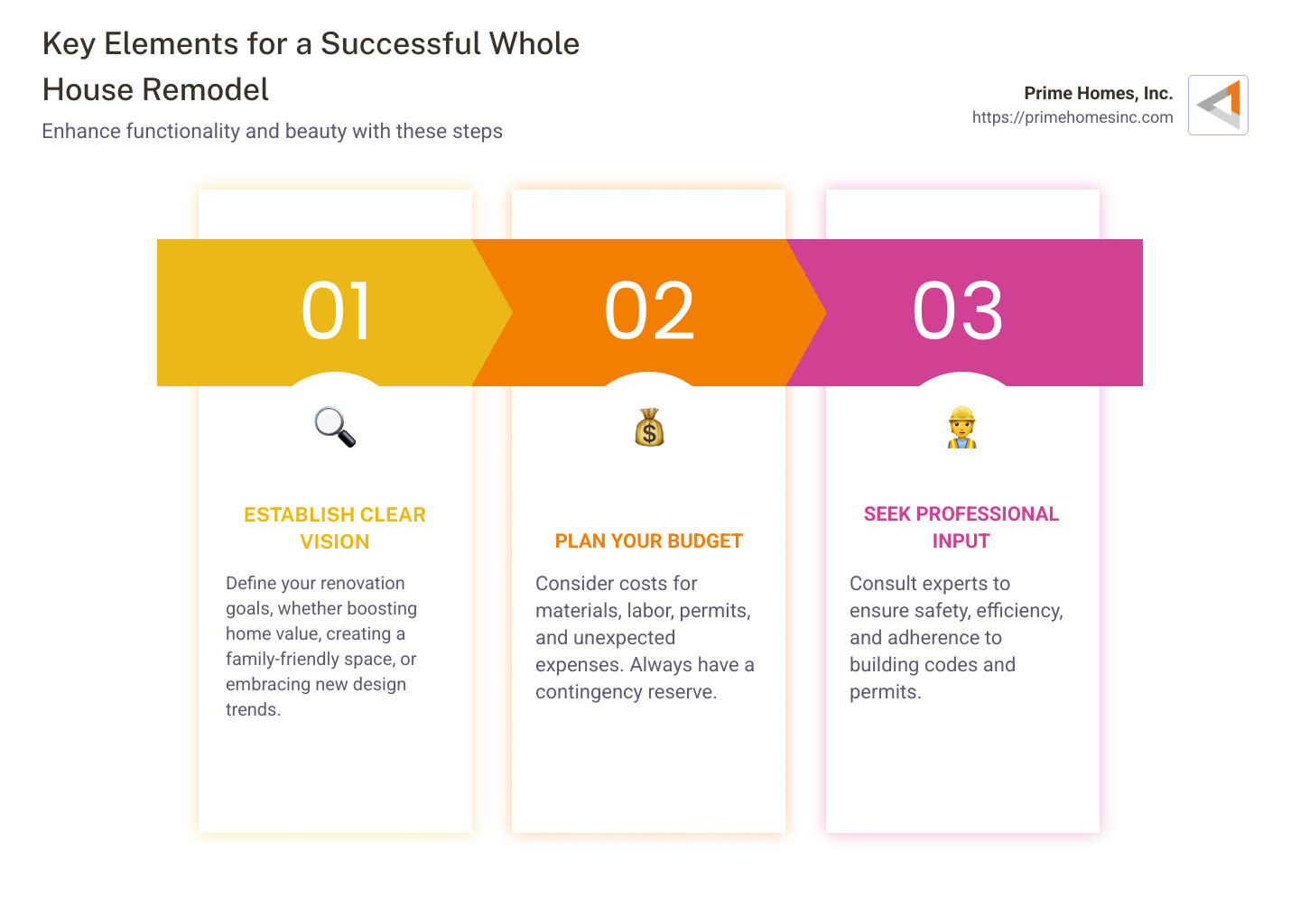
Remodeling Whole House can transform your home into a personalized space that resonates with your style and meets your needs. Yet, it demands careful planning, thoughtful design, and a well-crafted budget. Whether you aim to improve comfort, boost resale value, or update aesthetics, key elements to consider include:
- Clear Vision: Define your goals—whether it’s boosting home value, creating a family-friendly space, or embracing new design trends.
- Budget Planning: Factor in costs for materials, labor, permits, and unexpected expenses. A contingency reserve is crucial.
- Professional Input: Consulting experts ensures safety, efficiency, and quality while navigating building codes and permits.
“Establish what your goals and budget are and be realistic about the time it will take to complete. Take into consideration what your needs may be now and in the future.” – Jody Costello, Founder, ContractorsFromHell
I’m Jerome Bertuglia, the owner of Prime Homes, Inc. With over 30 years of experience in Remodeling Whole House, I specialize in crafting luxurious spaces custom to each client’s unique vision. My team and I are dedicated to delivering exceptional quality and ensuring every detail improves both functionality and beauty.
Remodeling Whole House vocab to learn:
– complete remodel cost
– ct home renovations
– remodel entire house
The Process of Remodeling a Whole House
Remodeling a whole house is a journey that transforms your living space from the ground up. Let’s break down the process into manageable steps.
Planning and Design
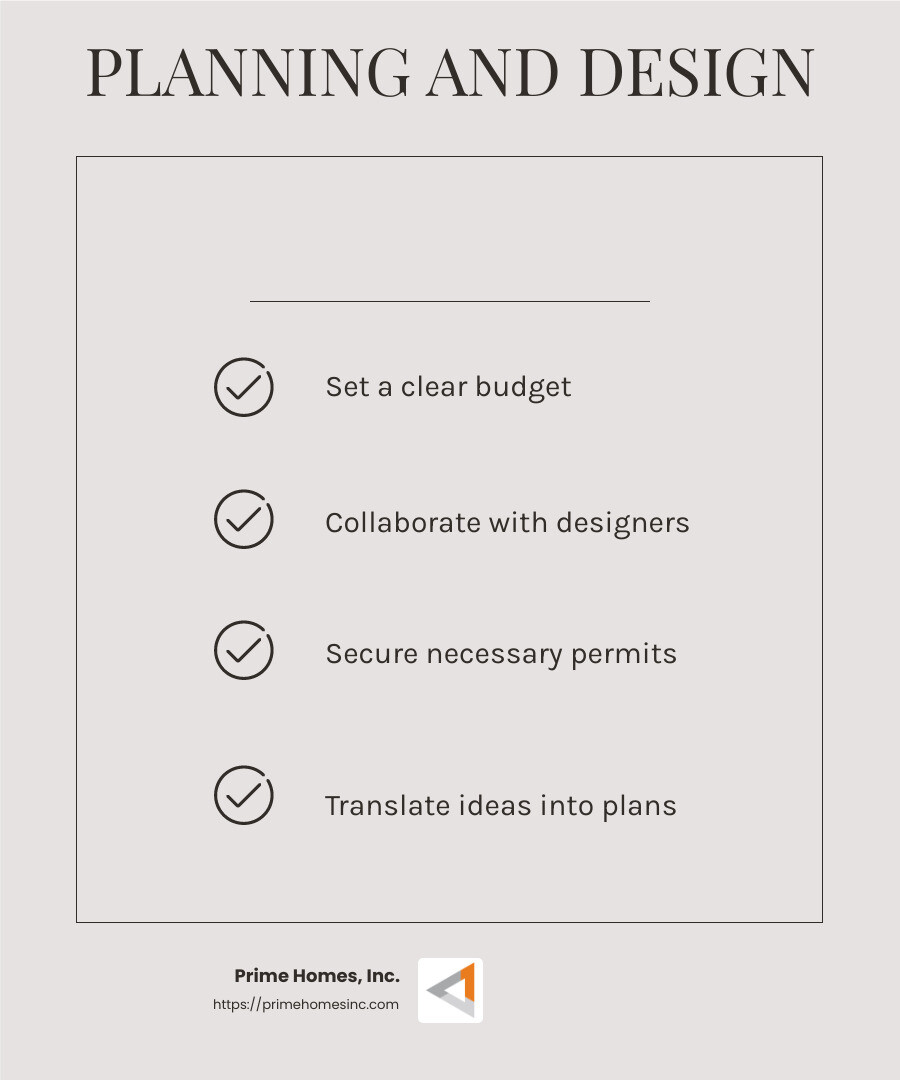
Before any hammer swings, the planning and design phase lays the groundwork. This step involves setting a clear budget, collaborating with designers and builders, and securing necessary permits. It’s crucial to communicate your vision. Work closely with your designer to translate ideas into actionable plans. This phase ensures that every detail aligns with your dream and prepares you for the journey ahead.
Demolition
Out with the old, in with the new! Demolition is where the change begins. It can range from removing old furniture and walls to a full gut, leaving only key structural elements. This phase is both exciting and nerve-wracking as you make way for new possibilities.
Rebuilding/Framing
The rebuilding phase shapes your home’s new structure. Whether adding new rooms or reconfiguring existing spaces, framing defines the physical boundaries. This is where your vision starts to take physical form.
Mechanicals/Plumbing/HVAC/Electrical
Behind-the-scenes work happens here. This phase involves installing or upgrading plumbing, HVAC, and electrical systems. It’s crucial as these systems lay the groundwork for comfort and functionality. This step often runs concurrently with rebuilding.
Walls
Once the skeleton of your home is in place, it’s time to add walls. Ensure all walls are built to code and insulated for energy efficiency. This step transforms open spaces into defined rooms.
Flooring
Choosing the right flooring improves both aesthetics and durability. Options include hardwood, tile, or carpet. Your choice should align with your home’s style and your lifestyle needs.
Cabinets
Custom cabinets can lift your kitchen and bathrooms. Consider materials that are easy to clean and maintain. Cabinets add functionality and beauty, making them a key component of your remodel.
Appliances
Installing new, energy-efficient appliances can save money in the long run. Look for appliances with high energy ratings to ensure efficiency and cost savings.
Final Touches
The final touches bring your vision to life. This includes paint, lighting, and furniture. These elements add personality and make your house feel like home.

With each step, your house transforms into a space that reflects your style and meets your needs. The process of Remodeling Whole House is about creating a home that resonates with you.
Next, we’ll dig into the Key Considerations for a Whole House Remodel, ensuring your project aligns with your goals and budget.
Key Considerations for a Whole House Remodel
When starting on the journey of Remodeling Whole House, there are three key considerations that can make or break your project: budget size, property condition, and project goals.
Budget Size
The size of your budget dictates the scope of your remodel. A clear and realistic budget helps prevent overspending and unexpected financial stress.
- Set a Realistic Budget: Determine how much you can afford to spend. Consider costs for materials, labor, permits, and a buffer for unexpected expenses.
- Prioritize Spending: Focus on areas that add the most value, like kitchens and bathrooms.
- Use Budgeting Tools: Construction budgeting software can help keep track of expenses and adjust your budget as needed.
Property Condition
The condition of your property sets the stage for your remodel. A fixer-upper might require more extensive work compared to a well-maintained home.
- Assess the Property: Conduct a thorough inspection to identify structural issues or outdated systems that need upgrading.
- Plan for Improvements: Address necessary repairs first, such as fixing leaks, updating electrical systems, or reinforcing structures.
- Consider the Impact: Understand how the property’s condition affects your timeline and budget.
Project Goals
Clearly defined goals ensure your remodel aligns with your vision and needs.
- Define Your Vision: Decide what you want to achieve. Are you remodeling for resale value, or to create a forever home?
- Plan for the Future: Consider long-term needs, like accessibility features for aging in place or space for a growing family.
- Balance Aesthetics and Functionality: Ensure your remodel not only looks good but also improves the home’s functionality.
“Establish what your goals and budget are and be realistic about the time it will take to complete,” advises Jody Costello, Founder of ContractorsFromHell.
Understanding these key considerations will guide you in making informed decisions, ensuring your whole house remodel is a success.
Next, we’ll explore the Cost Breakdown of a Whole House Remodel, diving into material costs, labor, and more.
Cost Breakdown of a Whole House Remodel
Understanding the costs involved in Remodeling Whole House is crucial for budgeting and planning. Here’s a simple breakdown of the main cost components:
Material Costs
Materials form a significant part of any remodel budget. Your choices here can greatly impact the overall cost.
- Low-End Materials: Options like vinyl flooring or laminate countertops are budget-friendly.
- Midrange Materials: These include ceramic tiles and quartz countertops, offering a balance between cost and quality.
- High-End Materials: Premium choices like marble countertops and hardwood floors can drive up costs.
Average Costs:
– Vinyl Flooring: $3 – $7 per sq ft
– Quartz Countertops: $50 – $140 per sq ft
– Marble Countertops: $60 – $200 per sq ft
Choosing materials wisely can save money. For instance, opting for quartz instead of marble can significantly reduce costs without compromising on quality.
Labor Costs
Labor is another major expense in a whole house remodel. Costs vary based on the complexity of work and the expertise of professionals.
- General Contractor: Oversees the project and coordinates various trades. Fees range from 10% to 20% of the total project cost.
- Subcontractors: Specialists like electricians, plumbers, and carpenters. Their hourly rates can range from $20 to $150.
Example: Remodeling a kitchen might require an electrician ($50-$100/hour), a plumber ($45-$200/hour), and a carpenter ($20-$120/hour).
Permit Costs
Permits are often required for structural changes or additions. Costs vary based on local regulations.
- Structural Changes: Removing a load-bearing wall can require a permit costing $50 to $1,800.
- Additions: Adding a room or expanding your home also requires permits, which can be more expensive.
Always check with your local building department to understand specific requirements and costs in your area.
Unexpected Expenses
No matter how well you plan, unexpected costs can arise. It’s wise to add an extra 20% to your budget to cover surprises.
- Examples of Unexpected Costs: Finding mold or asbestos during demolition can add $1,200 to $3,500 to your project costs.
Planning for these unforeseen expenses ensures your remodel stays on track without financial setbacks.
By understanding and planning for these cost components, you can better manage your budget and ensure a successful remodel.
Next, we’ll discuss the Remodeling Whole House: Steps to Success, providing a roadmap for your renovation journey.
Remodeling Whole House: Steps to Success
Remodeling a Whole House can be a daunting task, but with the right approach, it can be a smooth and rewarding process. Here’s how you can make your renovation a success:
1. Create a Detailed Plan
Start with a detailed plan. This is your roadmap for the entire project. It should include:
- Goals: Define what you want to achieve. More space? Modern look? Energy efficiency?
- Scope of Work: List what needs to be done in each room.
- Budget: Know how much you can spend and stick to it.
- Timeline: Set realistic deadlines for each phase.
A well-thought-out plan can help you avoid unnecessary changes and keep everyone on track.
Hire the Right Contractors
Choosing the right contractors is crucial. They bring the expertise needed for a successful remodel.
- Research and References: Look for experienced contractors with good reviews.
- Interview: Ask about their experience, past projects, and get a feel for their work style.
- Check Credentials: Ensure they are licensed and insured.
A reliable contractor will guide you through the process, help you stay on budget, and ensure quality work.
Timeline
Time management is key in a whole house remodel. Here’s how to keep your project on track:
- Plan Ahead: Start planning 6 to 12 months before your desired start date.
- Set Milestones: Break down the project into phases and set deadlines.
- Be Flexible: Delays can happen. Be prepared to adjust your timeline.
Problem Planning
Problems can arise, but being prepared can minimize their impact:
- Identify Potential Issues: Consider what could go wrong and have a plan.
- Contingency Fund: Set aside 20% of your budget for unexpected costs.
- Regular Check-ins: Monitor progress to catch issues early.
Cleanup
Don’t forget the final step: cleanup. Here’s how to handle it:
- Plan for Debris: Arrange for waste removal with your contractor.
- Final Touches: Once construction is complete, focus on cleaning and adding finishing touches.
- Inspect and Finalize: Do a walkthrough with your contractor to ensure everything is completed to your satisfaction.
With a detailed plan, the right team, and proactive problem-solving, your Remodeling Whole House project can be a success.
Next, let’s move on to Frequently Asked Questions about Remodeling Whole House to address common concerns and queries.
Frequently Asked Questions about Remodeling Whole House
Is a full house renovation worth it?
When considering a full house renovation, one of the biggest questions is whether it’s worth the investment. The answer often depends on your goals and circumstances.
Cost vs. Value: Renovating can significantly boost your home’s value. Projects like kitchen and bathroom upgrades often recoup up to 80% of their cost. However, not all renovations offer the same return. According to the Remodeling 2023 Cost vs. Value Report, projects like converting to an electric HVAC system or replacing a garage door can return 95% or more of their cost.
Resale Value: If you’re planning to sell, focus on renovations that appeal to buyers. Adding vinyl siding or replacing entry doors with steel ones can improve curb appeal and attract potential buyers. For those staying long-term, prioritize changes that improve your quality of life, like modernizing living spaces or adding energy-efficient features.
How much does it cost to remodel a 2,000 sq ft house?
The cost of remodeling a 2,000 sq ft house can vary widely based on several factors, including the scope of work, material choices, and location.
Average Costs: Generally, expect to spend between $10 to $150 per square foot. This means a full remodel could range from $20,000 to $300,000. Kitchens and bathrooms are the most expensive rooms to renovate due to plumbing and electrical work, with kitchen remodels ranging from $14,600 to $40,000 and bathrooms from $6,700 to $28,000.
Cost Factors: Factors influencing cost include the home’s condition, the complexity of the remodel, and the quality of materials. Historic homes, like those in the Twin Cities area, may require special considerations and permits, potentially increasing costs.
Is $100,000 enough to renovate a house?
A $100,000 budget can cover a significant portion of a home renovation, but it may not be enough for a comprehensive remodel of a large or historic home.
Budgeting Tips: Prioritize high-impact areas like the kitchen and bathrooms. Consider cost-effective updates, such as painting, which can refresh a space without breaking the bank. Always set aside a contingency fund for unexpected expenses, ideally 20% of your budget.
Project Scope: With $100,000, you might focus on updating key areas rather than a full overhaul. This budget could cover a midrange kitchen remodel, a few bathroom updates, and perhaps some flooring or painting throughout the house.
Understanding these factors can help you make informed decisions about your Remodeling Whole House project. Next, let’s explore how Prime Homes, Inc. can assist you in achieving your renovation goals.
Conclusion
At Prime Homes, Inc., we understand that Remodeling Whole House projects are more than just construction tasks—they’re journeys toward changing your living space into a personalized sanctuary. Our approach is rooted in a commitment to personalized luxury, ensuring that every home we renovate is a true reflection of our client’s vision and lifestyle.
Client Collaboration is at the heart of what we do. We believe that the most successful projects stem from open communication and a deep understanding of our clients’ desires. From the initial design phase to the final touches, we involve you every step of the way. This hands-on collaboration ensures that your home not only meets but exceeds your expectations.
Our team of skilled designers and craftsmen is dedicated to creating luxurious living spaces that blend style with functionality. Whether it’s a state-of-the-art kitchen, a serene bathroom oasis, or an inviting living room, we tailor every space to improve your living experience.
For those considering a full home renovation, partnering with Prime Homes, Inc. means choosing a team that values your dreams as much as you do. We invite you to start on this exciting journey with us, where your visions are transformed into reality, creating a space that is uniquely yours.
Ready to start your renovation journey? Explore our whole house renovations and find how we can help turn your dream home into a reality. Let’s build something amazing together!
