

Definition of Cape Cod Style House: 5 Timeless Features

The definition of cape cod style house is about simplicity, charm, and enduring design originating from New England. These houses feature a low, rectangular structure with a steep gabled roof, central chimney, and symmetrical facade. Materials like shingle siding complement the classic look, making Cape Cod homes both functional and visually appealing.
With its roots deeply planted in American history, Cape Cod architecture emerged in the 17th century as early settlers adapted English cottage designs to fit New England’s challenging climate. This style remains iconic, resonating with nostalgic appeal and practicality, ideal for those who appreciate historical elegance and simplicity.
My name is Jerome Bertuglia, owner of Prime Homes, Inc. With over 30 years of experience in crafting unique homes in West Hartford, CT, I have a solid grasp of the definition of cape cod style house, recognizing its significance in architectural heritage. Let’s explore the richness of Cape Cod homes and how they continue to capture the essence of American design.
Definition of Cape Cod Style House
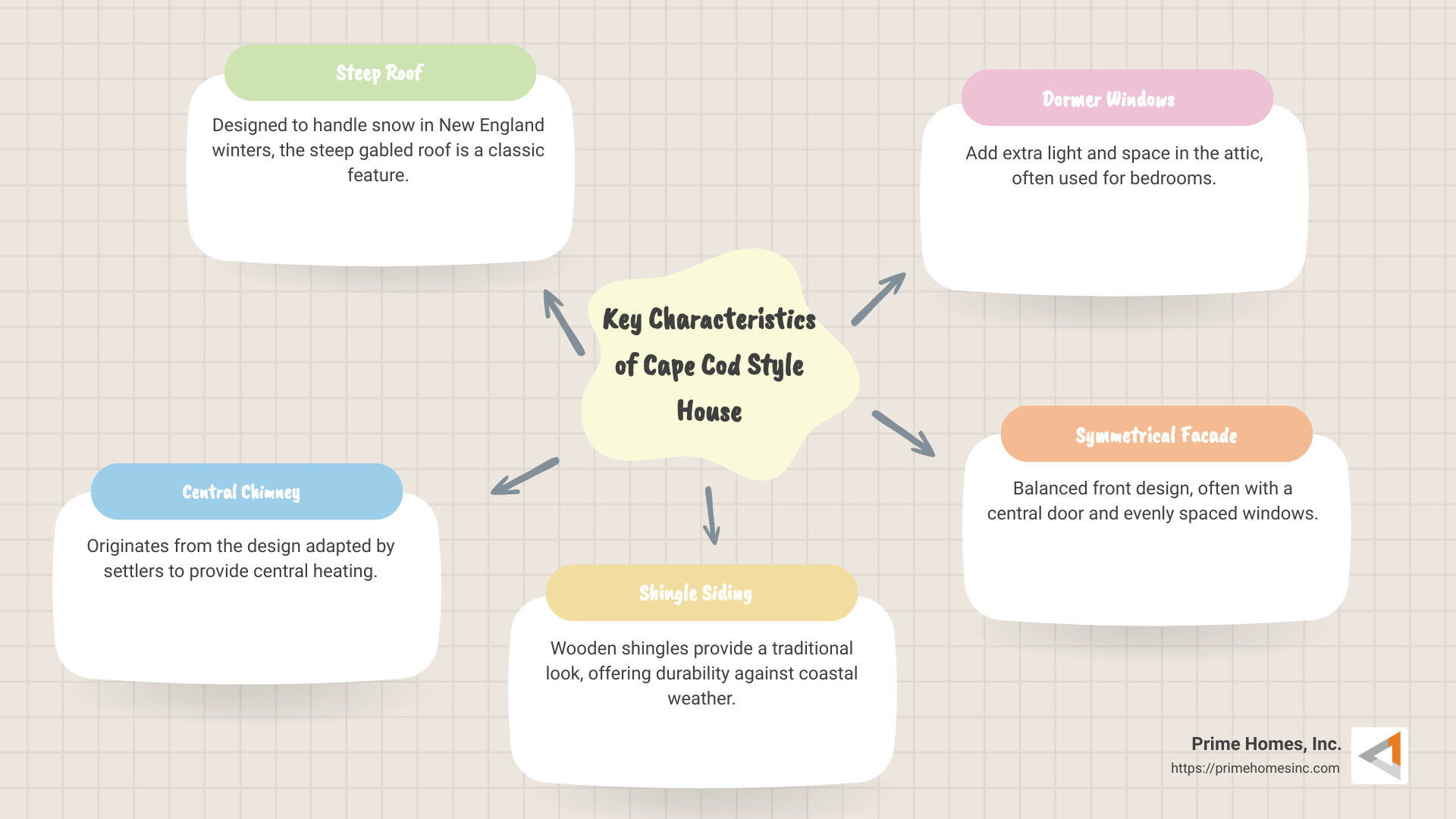
A Cape Cod style house is a classic example of American architecture that combines simplicity with functionality. This style is easily recognized by its symmetrical design, steep roof, and central chimney.
Symmetrical Design
One of the key features of a Cape Cod style house is its symmetrical layout. Imagine a house with a central door flanked by an equal number of windows on each side. This balanced design is not just about aesthetics; it helps distribute the weight of the roof evenly, making the structure more stable.
A quote from Douglas C. Wright, an architect, captures this essence: “The Cape Cod house embodies the idea embedded in everybody’s subconscious about what a summer home is.”
Steep Roof
The steep, gabled roof is another hallmark of Cape Cod homes. This design is practical, especially in areas with heavy snowfall, as it allows snow to slide off easily. The steep pitch also provides additional space in the attic or upper floor, often used for extra bedrooms or storage.
Central Chimney
The central chimney is a defining feature of Cape Cod houses. In the past, it was crucial for heating the entire home, as it allowed multiple fireplaces to be connected to a single chimney. This design was not only efficient but also essential for survival in the harsh New England winters. Even today, the central chimney remains a beloved feature, adding warmth and charm to the home.

Conclusion
Cape Cod style houses are more than just homes; they are a piece of American history. Their simple yet neat design continues to appeal to those who appreciate both historical charm and modern practicality. As we dig deeper into the features and history of these homes, we will uncover why they have remained a beloved choice for homeowners across the United States.
Key Features of Cape Cod Style Homes
Cape Cod style homes are renowned for their simplicity and functionality, with several distinctive features that have stood the test of time. Let’s explore the key elements that define these charming homes:
Gabled Roof
The gabled roof is a standout feature of Cape Cod homes. Characterized by its steep pitch, this design allows for efficient shedding of snow and rain, a necessity in the cold, stormy climates of New England where these homes originated. The roof’s design not only improves durability but also adds to the iconic silhouette of the Cape Cod style.
Shingle Siding
Traditionally, Cape Cod homes are clad in shingle siding, often made from cedar. Over time, these shingles weather to a distinctive gray, blending beautifully with the natural landscape. The choice of shingles is both practical and aesthetic, offering protection against harsh weather while contributing to the rustic charm of the home.
Dormer Windows
Dormer windows are a later addition to Cape Cod homes, particularly popular during the Colonial Revival period. These windows break up the roofline, adding both light and space to the upper floors. Dormers not only improve the home’s exterior appeal but also make the attic space more usable, often changing it into cozy bedrooms or storage areas.
Low Ceilings
One of the more practical features of traditional Cape Cod homes is their low ceilings. Originally designed to conserve heat, these ceilings help maintain warmth during the cold winters. While modern variations may have higher ceilings, many homes retain this feature, adding to their cozy, intimate atmosphere.
Central Chimney
The central chimney is a hallmark of Cape Cod architecture. Positioned centrally, it served a crucial role in heating early homes, allowing multiple fireplaces to connect to a single chimney. This design was vital for survival in harsh winters and remains a beloved feature for its historical significance and the warmth it brings to the living space.
Cape Cod style homes blend historical practicality with timeless charm, making them a beloved choice for homeowners who appreciate both tradition and simplicity. As we continue to explore the history and evolution of these homes, we’ll uncover the reasons behind their enduring popularity.
History and Evolution
The Cape Cod style house is a remarkable testament to architectural adaptability and resilience. Its journey through history reflects both its practical origins and its enduring appeal.
17th-Century Origins
Cape Cod homes trace their roots back to the 17th century, when English settlers arrived in New England. Faced with a harsh climate, these early colonists adapted their homes to withstand the elements. The design was inspired by the English Hall and Parlor house but was modified to include features like steep roofs and central chimneys. These elements were not just stylistic choices; they were necessary for survival in the cold, windy winters of the region. The use of local materials like cedar and pine further anchored these homes in their environment, creating a style that was both practical and beautiful.
Colonial Revival
Fast forward to the early 20th century, and the Cape Cod style experienced a resurgence during the Colonial Revival. This period, spanning the 1920s to the 1950s, saw a renewed interest in America’s architectural past. Architects like Royal Barry Wills played a pivotal role in modernizing the Cape Cod home, integrating contemporary amenities while maintaining its historical charm. These homes became a symbol of middle-class aspiration, offering a blend of tradition and modernity. The addition of features such as dormer windows and side extensions during this time helped adapt the classic design to the needs of larger families and more modern lifestyles.
Mid-20th-Century Popularity
The post-World War II housing boom further cemented the popularity of Cape Cod homes. Suburban developments like Levittown, New York, showcased rows of Cape Cod style houses, making them accessible to returning soldiers and their families. These homes were affordable, easy to construct, and perfectly suited to the needs of the era’s burgeoning suburban culture. The simplicity and efficiency of the Cape Cod design made it an ideal choice for planned communities, where uniformity and cost-effectiveness were key.
Through centuries of adaptation, the Cape Cod style has retained its core characteristics while evolving to meet modern needs. Its blend of practicality and charm continues to captivate homeowners, making it a timeless staple of American architecture. The Cape Cod home remains a beloved choice for those seeking a connection to history with the comforts of contemporary living.
Types of Cape Cod Homes
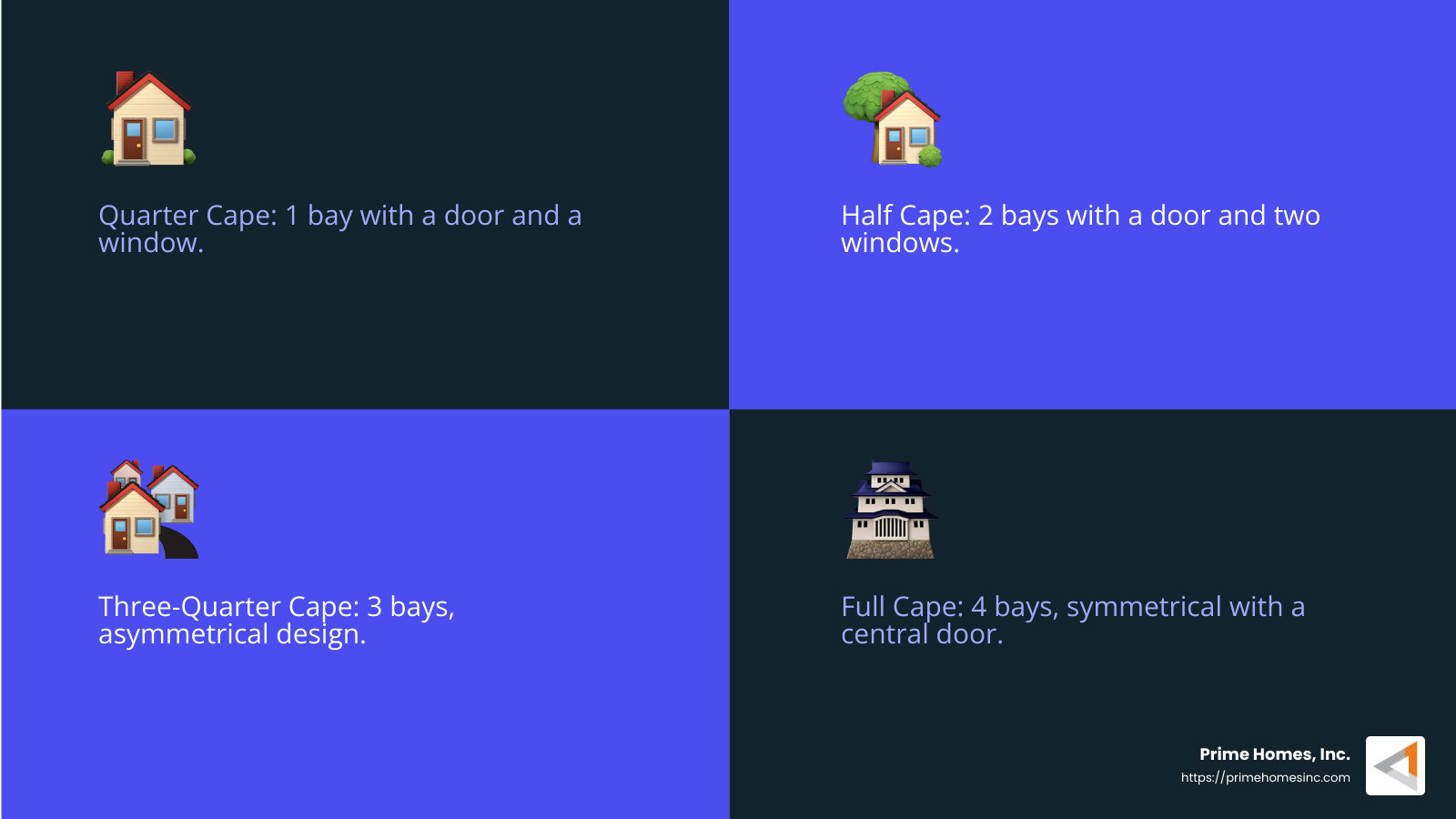
Cape Cod homes come in several distinct types, each with its own unique charm and historical significance. These variations are primarily based on the number of bays—or sections—across the front of the house. Let’s explore the different types of Cape Cod homes: quarter Cape, half Cape, three-quarter Cape, and full Cape.
Quarter Cape
The quarter Cape is the smallest and rarest of the Cape Cod styles. This type features a single bay, which means it has just one front door and one window beside it. Despite its compact size, the quarter Cape offers a cozy and intimate living space. It was often built by settlers as a starter home, with plans for future expansion.
Half Cape
Next up is the half Cape, which consists of two bays. This design includes a door on one side of the front and two windows on the other. The half Cape was more common among early settlers due to its practicality. It provided more living space than the quarter Cape while still allowing for future additions. Many half Capes were later expanded into three-quarter or full Capes as the owners’ families grew or their financial situations improved.
Three-Quarter Cape
The three-quarter Cape is a middle ground between the half and full Cape. It features a door flanked by two windows on one side and a single window on the other. This asymmetrical design offers a bit more space and light compared to the half Cape. The three-quarter Cape was a popular choice for growing families, as it provided additional room without the expense of a full Cape.
Full Cape
Finally, we have the full Cape, also known as the double Cape. This is the most symmetrical and spacious of the Cape Cod styles, with a centrally located door and two windows on each side. The full Cape represents the quintessential Cape Cod home, often associated with the Colonial Revival period. It embodies the balance and simplicity that define Cape Cod architecture, making it a favorite among those who appreciate traditional design.
Each type of Cape Cod home has its own story and purpose, reflecting the needs and resources of its original builders. Whether you’re drawn to the quaint charm of a quarter Cape or the classic symmetry of a full Cape, these homes offer a timeless appeal that continues to capture the hearts of homeowners today.
Frequently Asked Questions about Cape Cod Style Homes
What is the difference between a Cape Cod and a Colonial house?
Cape Cod and Colonial houses may look similar at first, but they have some key differences.
Roof Style: Cape Cod homes have steep, gabled roofs designed to handle heavy snow. Colonials often have gambrel roofs, especially in Dutch Colonial variations, which give them a more formal look.
Ornamentation: Cape Cod homes are known for their simple, symmetrical design with minimal decoration. Colonials, on the other hand, might include decorative trims and columns, adding an neat touch.
Stories: Cape Cod homes are typically one or one-and-a-half stories tall. Colonial homes usually have two full stories, providing more space for larger families.
What are the disadvantages of a Cape Cod style house?
While Cape Cod homes are charming, they do have some drawbacks.
Insulation Issues: Many older Cape Cod homes have insulation challenges. Their steep roofs and small windows can lead to drafts and higher heating costs in winter.
Maintenance: The shingle siding and steep roofs require regular upkeep. Without proper care, these features can wear down over time, especially in harsh climates.
Do Cape Cod houses have basements?
The presence of a basement in a Cape Cod house often depends on its age and location.
Modern vs. Older Capes: Many modern Cape Cod homes include basements, offering extra storage or living space. Older Capes, especially those built in the 17th and 18th centuries, might not have basements due to construction practices of the time.
Cape Cod Basement: When present, a Cape Cod basement is usually a simple, unfinished space. It’s often used for storage, but can be renovated to add more usable space to the home.
Understanding these aspects can help you appreciate the unique qualities of Cape Cod homes and decide if this style suits your needs.
Conclusion
Cape Cod style homes have a timeless charm that’s hard to resist. Their simple, symmetrical design and practical features make them a beloved choice for many homeowners. These homes blend historical elegance with modern comfort, creating spaces that are both beautiful and functional.
At Prime Homes, Inc., we take pride in our ability to bring the classic Cape Cod style to life. Our focus is on delivering high-quality, customized homes that reflect your individual vision. We work closely with our clients to ensure every detail aligns with their lifestyle and needs.
Whether you’re drawn to the steep gabled roofs or the cozy interiors, a Cape Cod home offers a unique blend of history and charm. It’s more than just a house; it’s a piece of American heritage.
Ready to make your dream Cape Cod home a reality? Contact us today to start your journey towards owning a piece of timeless architecture. Let’s create a space that’s perfect for you.
