

Cape Cod House Styles: 5 Timeless Features Revealed
When you think about cape cod house styles, what comes to mind is a blend of simplicity, charm, and resilience against New England’s stormy weather. These homes, characterized by their steep gabled roofs, central chimneys, and symmetrical facades, have a timeless appeal rooted in functionality and tradition. Emerging from the coastal landscape of New England in the 17th century, they embody a straightforward design that has inspired homeowners for generations. Whether you’re drawn to their historical charm or their enduring practicality, cape cod house styles offer both a classic aesthetic and a cozy retreat.
My name is Jerome Bertuglia, and I am proud to lead Prime Homes, Inc., a company with over 30 years of experience crafting exceptional homes with personalized craftsmanship. Our expertise in cape cod house styles ensures that your dream home is a seamless blend of tradition and innovation, providing a legacy you’ll cherish for years to come.
The Origins of Cape Cod House Styles
The story of Cape Cod house styles begins in the 17th century when Puritan settlers arrived in New England from England. These early colonists brought with them the architectural designs of their homeland, specifically the “hall and parlor” homes. However, they quickly realized the need to adapt these designs to withstand the harsh New England climate.
Adapting to New England
In England, homes were often built with half-timber construction, which wasn’t ideal for the extreme weather conditions of New England. The settlers modified these designs, creating a more robust, box-like structure that could better resist the region’s bitter winters and strong winds. This adaptation led to the classic Cape Cod house style we recognize today, with its steep roof and central chimney designed to efficiently shed snow and provide warmth.
Symmetry and Simplicity
The original Cape Cod homes were modest in size, typically one or one-and-a-half stories tall. They had a symmetrical facade with a central front door flanked by multi-paned windows. This symmetry wasn’t just for aesthetics; it was a practical design choice that helped distribute heat evenly throughout the home.
Cape Cod houses were more than just practical solutions; they became an integral part of the American colonial landscape. By the 18th century, these homes were prominent throughout New England and even spread to other regions like Long Island and the Ohio Valley. Their design perfectly embodied the settlers’ need for simplicity, functionality, and durability.
Evolution Over Time
The Cape Cod house style has evolved over the centuries. While the original homes were small and utilitarian, the Cape Cod Revival in the 20th century saw the addition of modern amenities like bathrooms and garages. This revival was popularized by architects such as Royal Barry Wills, who helped make these homes accessible to the middle class.
Today, Cape Cod homes continue to be a beloved architectural style, blending historical charm with modern comforts. Whether nestled in the snowy landscapes of New England or found in other parts of the country, they remain a testament to the adaptability and ingenuity of early American settlers.
Key Features of Cape Cod House Styles
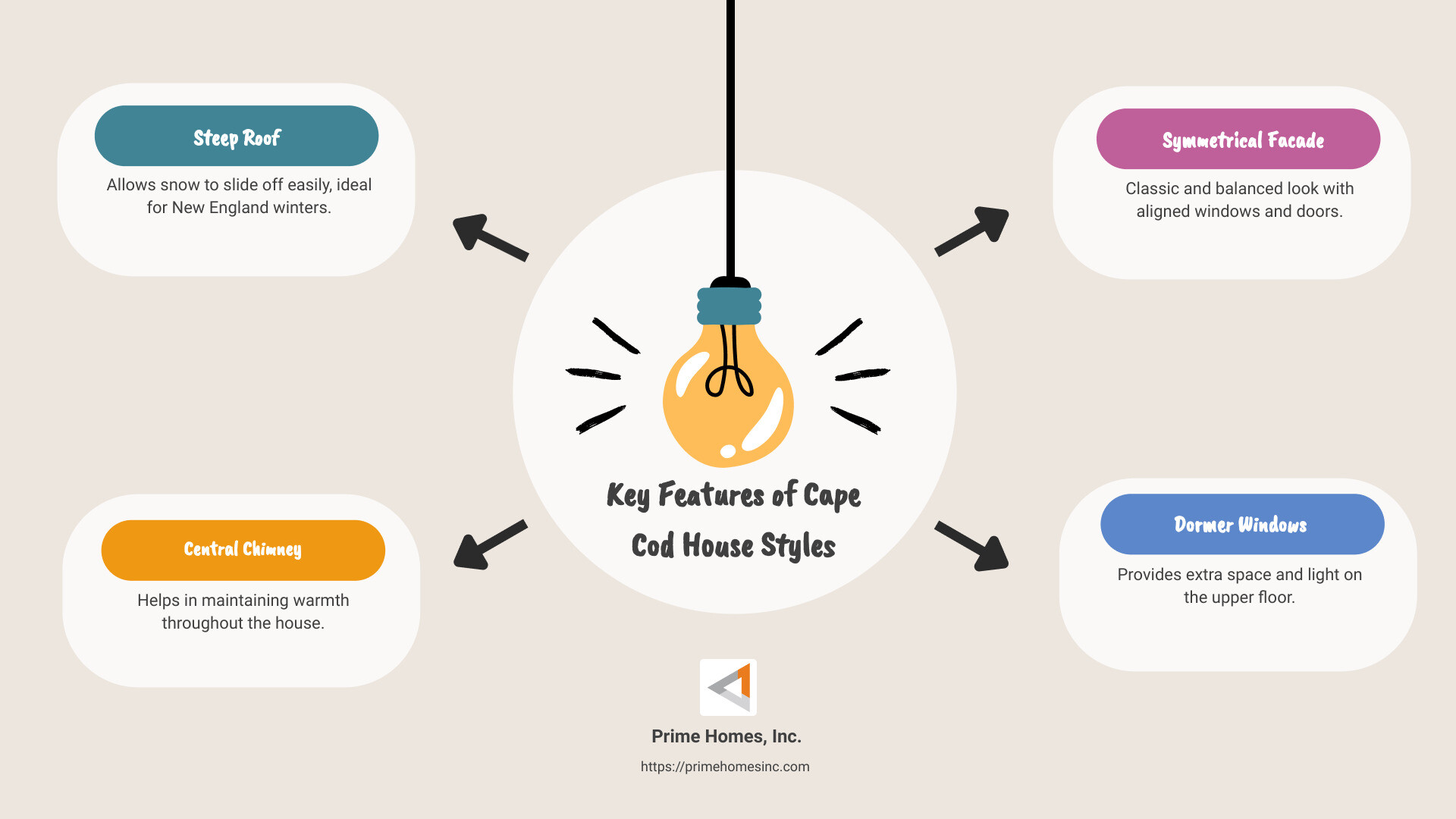
A hallmark of Cape Cod house styles is their symmetrical facade. Imagine a simple rectangle with a central front door. On each side of this door are evenly spaced, multi-paned windows. This design isn’t just about looking pretty. It helps distribute heat evenly, which is crucial in cold New England winters.
Steep Roof
The steep roof is another defining feature of Cape Cod homes. It’s like the house is wearing a hat with a sharp peak. This design allows snow and rain to slide off easily, protecting the home from harsh weather. It also adds a bit of extra space in the attic, which can be handy.
Central Chimney
Picture a large chimney right in the middle of the house. This was originally designed to heat the entire home efficiently. Back in the day, it was the main source of warmth during freezing winters. Even though modern heating has taken over, the central chimney remains a beloved feature for its historical charm.
Dormer Windows
Dormer windows were added to Cape Cod homes in the 1920s. These small, windowed structures pop out of the roof, letting in light and air. They also make the upstairs space feel bigger and more open. Dormers are a great way to combine practicality with a touch of style.
Low Ceilings
Cape Cod homes often have low ceilings. This design helps keep the heat down where people are, making the home cozy and warm. While modern versions sometimes have higher ceilings, the traditional low ceilings add to the snug, cottage-like feel that many people love.
These features come together to create homes that are not only practical but also charming. They reflect the settlers’ need for simplicity and functionality, making Cape Cod house styles a timeless favorite.
Variations of Cape Cod House Styles
When it comes to Cape Cod house styles, understanding the variations is key. Each type offers its own unique charm and functionality. Let’s break down the four main styles: quarter Cape, half Cape, three-quarter Cape, and full Cape.
Quarter Cape
The quarter Cape is the smallest and rarest of the Cape Cod styles. It features a single window and door on the front, creating a compact and cozy appearance. This style is perfect for those who love simplicity and minimalism. While it might seem tiny by today’s standards, its snugness made it ideal for early settlers who needed efficient heating.
Half Cape
Moving up in size, the half Cape has two windows on one side of the front door. This asymmetrical design gave homeowners a bit more space and light. Historically, many families started with a half Cape and expanded as needed. Its straightforward design remains popular for those wanting a balance between space and coziness.
Three-quarter Cape
The three-quarter Cape adds a bit more symmetry with three windows on the front: two on one side of the door and one on the other. This style offers more interior space and a slightly grander facade. It’s a popular choice for those who appreciate the traditional look but want a bit more room to breathe.
Full Cape
Finally, the full Cape is the most symmetrical and spacious of the Cape Cod styles. With two windows on each side of the centered front door, it presents a balanced and classic appearance. This style is often referred to as the “double Cape” due to its larger footprint. Full Capes are ideal for families who need more space while still enjoying the charming aesthetics of Cape Cod design.
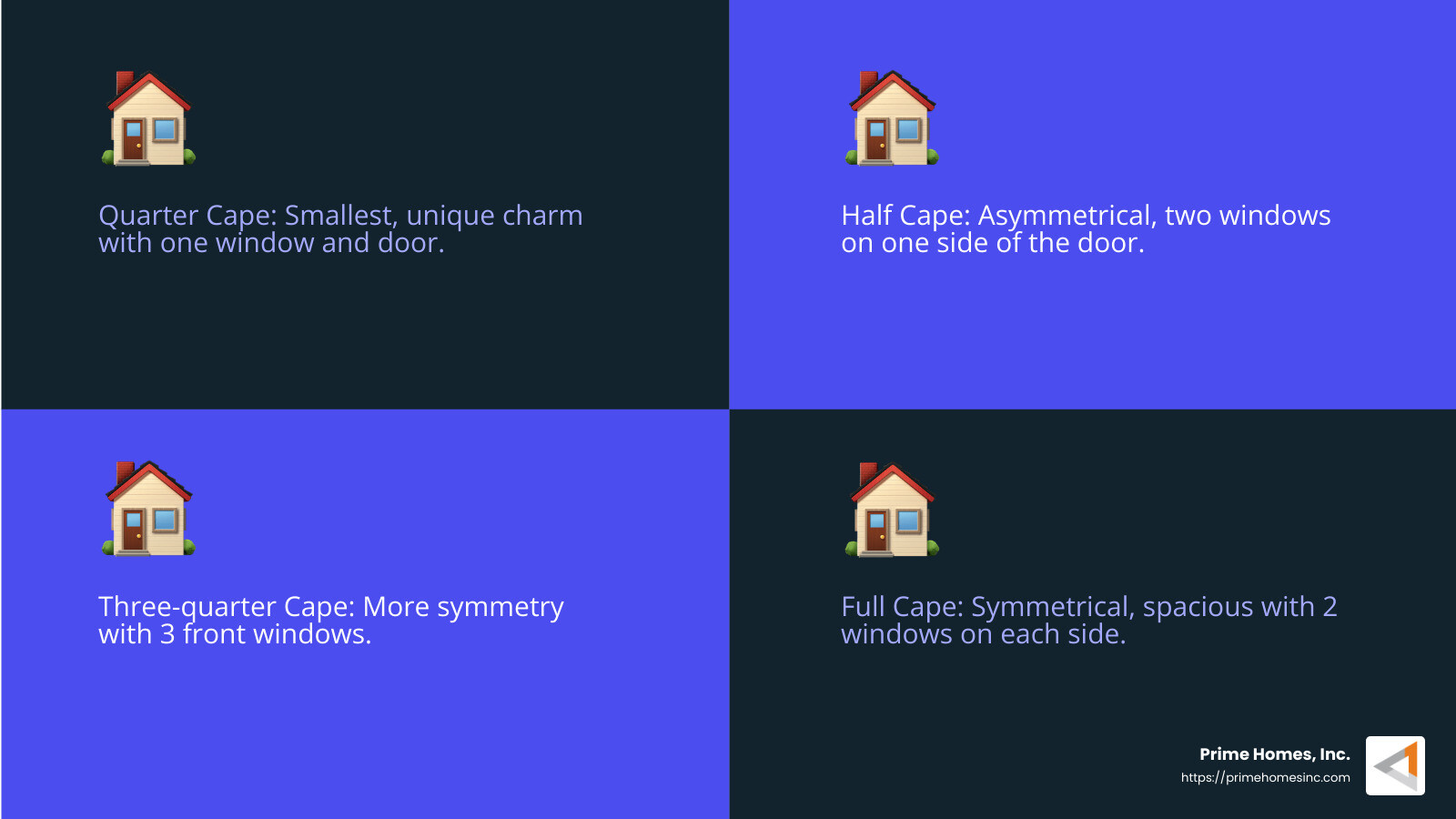
Each variation of the Cape Cod style reflects the adaptability and resourcefulness of early American settlers. Whether you prefer the quaintness of a quarter Cape or the spaciousness of a full Cape, these homes offer a timeless appeal that continues to capture hearts.
Pros and Cons of Cape Cod House Styles
When considering Cape Cod house styles, it’s important to weigh the benefits and drawbacks. Let’s dig into the main pros and cons that define these classic homes.
Pros
Curb Appeal
Cape Cod homes are known for their timeless charm and symmetrical facade. With a central door flanked by shutter-clad windows, they offer a picturesque look that adds instant curb appeal. The clean lines and simple design make them a favorite for those who appreciate classic architecture.
Winter Suitability
Originally designed to withstand harsh New England winters, Cape Cod homes feature steep, gabled roofs that help shed snow easily. The central chimney aids in even heat distribution, making these homes cozy during the cold months. This weather resilience is a significant advantage for homeowners in snowy climates.
Cons
Second-Floor Limitations
One of the common challenges with Cape Cod homes is the limited space on the second floor. The sloped ceilings can make rooms feel cramped and restrict furniture placement. While dormers can add light and space, they don’t completely eliminate the issue of tight quarters.
Expansion Challenges
Expanding a Cape Cod home can be tricky. The steep rooflines and central chimney can limit options for adding extra rooms or floors. Any expansion requires careful planning to maintain the home’s traditional charm and symmetry. This can be a hurdle for families needing more space.
Cape Cod homes offer a unique blend of historical charm and practical design, making them a popular choice for many. However, potential homeowners should consider these pros and cons to ensure the style fits their needs.
Decorating and Interior Design in Cape Cod Homes
Decorating a Cape Cod home is all about embracing its cozy, coastal charm. Here are some simple ways to capture that classic feel.
Traditional Lines and Rustic Charm
Cape Cod homes are known for their simple, traditional lines. Think clean and classic. The interior often features wainscoting on the walls, which adds a touch of rustic charm while helping to manage moisture. Exposed beams and wood floors add warmth and character, creating a welcoming atmosphere that feels both timeless and inviting.
Nautical Accents
To improve the coastal vibe, consider adding nautical accents. Items like seashells, driftwood, and anchors bring the sea indoors. You might use a ship wheel as a wall decoration or choose cushions with marine life prints. These touches remind you of the ocean and are perfect for a Cape Cod-style home.
Color Palette
The color palette in a Cape Cod home should evoke the feeling of the sea and sand. Stick to neutral tones like light blues, soft greens, and earthy hues. Pair these with white trim to create a serene and airy atmosphere. This color scheme mirrors the coastal tranquility that Cape Cod homes are famous for.
Furniture Choices
When choosing furniture, focus on comfort and simplicity. Cozy, plush furnishings are a must. Think reclaimed wood tables and wicker chairs. These materials not only add warmth but also fit perfectly with the home’s natural and rustic feel.
Open Floor Plans
Modern Cape Cod interiors often open up walls to create larger living areas. This makes the space feel airy and inviting, ideal for family gatherings. An open floor plan improves the flow of natural light, making the home feel even more connected to its coastal surroundings.
Decorating a Cape Cod home is about blending traditional elements with a touch of coastal flair. By focusing on these key aspects, you can create a space that feels both classic and fresh, perfectly capturing the essence of Cape Cod house styles.
Frequently Asked Questions about Cape Cod House Styles
What are the different types of Cape Cod houses?
Cape Cod houses come in four main variations: quarter Cape, half Cape, three-quarter Cape, and full Cape.
- Quarter Cape: This is the smallest and rarest type. It features a single front door and one window. It’s compact and cozy, ideal for small families or as a starter home.
- Half Cape: With a front door on one side and two windows on the other, the half Cape offers a bit more space. It’s a popular choice for those who want a balance between size and simplicity.
- Three-quarter Cape: This style has a slightly asymmetrical look with a door and two windows on one side and a single window on the other. It’s perfect for those who want a unique twist on traditional symmetry.
- Full Cape: Known for its symmetry, a full Cape has a centered front door flanked by two windows on each side. This design is the most spacious and often includes a large central chimney.
What are the disadvantages of a Cape Cod style house?
While Cape Cod house styles are charming and iconic, they do have some drawbacks:
- Insulation Issues: Traditional Cape Cod homes may struggle with insulation due to their original construction methods. This can lead to higher heating costs in winter.
- Cramped Second Floor: The steep roof often means limited space on the second floor. Ceilings can be low, which might make the area feel cramped.
- Heat Trapping: The central chimney can sometimes cause heat to be unevenly distributed, making it challenging to maintain a consistent temperature throughout the home.
How is a Cape Cod different from a Colonial?
While both styles are rooted in American history, there are key differences:
- Symmetry: Cape Cod homes are known for their symmetrical facade, especially in the full Cape design. Colonial homes may not always follow this pattern.
- Size: Cape Cod homes are typically smaller and more compact, while Colonial homes are often larger with more rooms.
- Ornamental Features: Colonials often include more decorative elements like columns and elaborate trim, whereas Cape Cod homes focus on simplicity and functionality.
Understanding these differences can help you choose the right style for your needs and preferences.
Conclusion
At Prime Homes, Inc., we believe in the timeless appeal of Cape Cod house styles. These homes capture the essence of classic American architecture with their simple lines and charming features. From the steep roofs to the central chimneys, each element tells a story of New England’s rich history.
Our team is passionate about blending this historical charm with modern comfort. We specialize in crafting homes that not only reflect the elegance of Cape Cod architecture but also cater to contemporary lifestyles. Our commitment to personalized craftsmanship ensures that every home we build is a true reflection of its owner’s vision.
Imagine a home that combines the cozy, low-ceilinged interiors of a traditional Cape Cod with the latest amenities and sustainable materials. Whether you’re dreaming of a new build or restoring an existing home, we’re here to help you create a space that’s both beautiful and practical.
Ready to start your journey towards owning a piece of timeless architecture? Contact Prime Homes, Inc. today. Let’s work together to bring your dream Cape Cod home to life.
