

Home Improvement Costs: Top 5 Proven Budgeting Tips
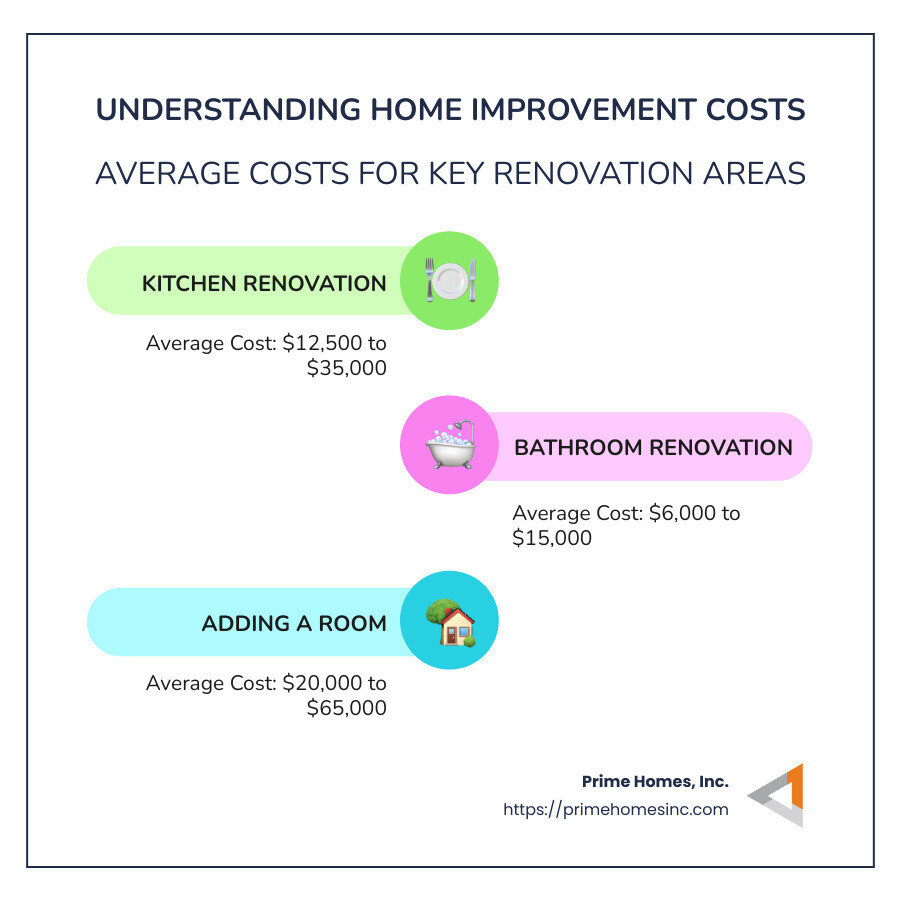
If you’re navigating home improvement costs, understanding the expenses involved is key to making the most informed decisions. Here’s a quick breakdown of average costs:
- Kitchen Renovation: $12,500 to $35,000
- Bathroom Renovation: $6,000 to $15,000
- Adding a Room: $20,000 to $65,000
Home renovation can be both exciting and daunting, especially when it comes to estimating costs. From minor touch-ups to full-blown remodels, understanding how much these projects can impact your budget is crucial. Factors such as project scope, materials, and location can all drive costs. But a well-planned budget can turn any renovation dream into reality without the stress of overspending.
My name is Jerome Bertuglia, owner of Prime Homes, Inc., and I’ve spent over 30 years guiding clients through the maze of home improvement costs, ensuring they receive the most value for their investment. With my experience in custom luxury home construction, I’m here to help you steer this process and achieve your renovation goals.
Understanding Home Improvement Costs
When planning a home renovation, understanding home improvement costs is essential. These costs can vary widely based on several key factors. Let’s break down what affects these costs and how they differ by room type.
Factors Affecting Costs
1. Size of the Project:
The bigger the renovation, the more it will likely cost. A small bathroom update will be less expensive than a full kitchen remodel. Larger spaces require more materials and labor, which increases the overall cost.
2. Type of Renovation:
The type of work being done also affects costs. Cosmetic changes, like painting or new flooring, are generally less expensive than structural changes, such as moving walls or adding new plumbing.
3. Labor Costs:
The cost of labor can vary depending on the project’s complexity and the expertise required. Skilled labor, like plumbing and electrical work, often costs more. It’s important to hire licensed professionals to ensure quality and safety.
4. Location:
Where you live can impact renovation costs. In areas like West Hartford, CT, and Glastonbury, CT, labor and material costs might be higher than in other parts of the state. Local market conditions and demand can influence pricing.
Cost by Room Type
Kitchen:
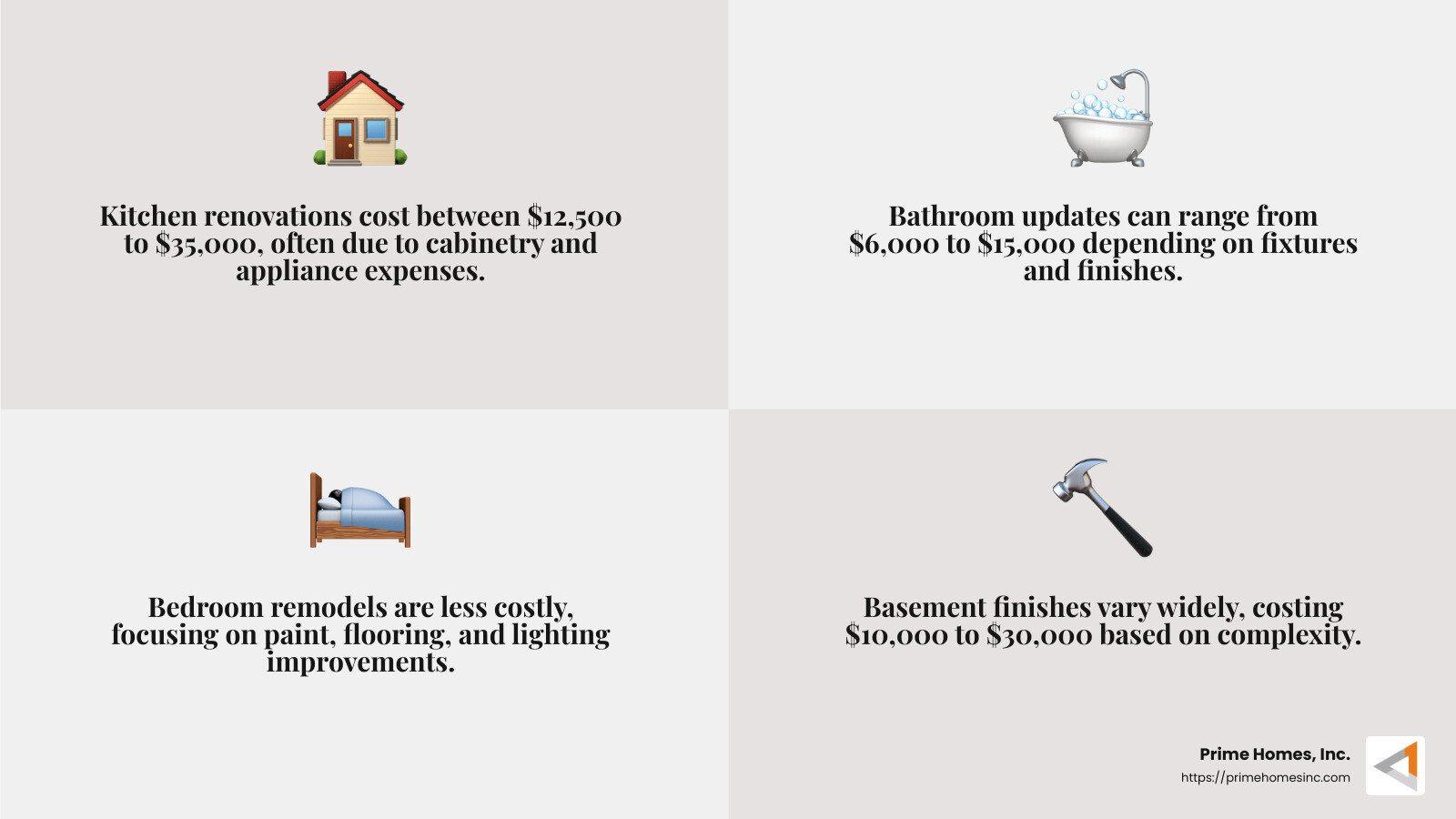
Kitchens are one of the most expensive rooms to renovate, with costs ranging from $12,500 to $35,000. This is due to the complexity of kitchen systems, including plumbing and electrical, and the high cost of cabinets and appliances.
Bathroom:
Bathroom renovations can cost between $6,000 and $15,000. Costs depend on the fixtures and finishes you choose. High-end materials like marble or custom vanities will increase the price.
Bedroom:
Renovating a bedroom is generally less expensive, often focusing on cosmetic updates like paint, flooring, and lighting. Costs can range from a few hundred to several thousand dollars, depending on the scope.
Basement:
Finishing a basement can range from $10,000 to $30,000. The cost depends on whether you’re creating a simple storage area or a fully functional living space with plumbing and electrical work.
Garage:
Renovating a garage can vary widely in cost. Simple updates like new flooring or storage solutions might be a few thousand dollars, while converting a garage into a living space can cost significantly more.
Understanding these factors and costs by room type helps in creating a realistic budget. By knowing what to expect, you can plan your project more effectively and avoid unexpected expenses.
Estimating Your Home Renovation Budget
Creating a budget for your home renovation is like drawing a map for your journey. It helps you steer through expenses and avoid unexpected detours. Let’s explore how to estimate and set a realistic budget for your project.
Using a Cost Estimator
A cost estimator is your best friend when planning a renovation. It helps you see where your money will go and keeps surprises at bay. Start by using a spreadsheet to list all the elements of your project. Here’s how to get started:
- Make a Copy of the Spreadsheet:
This allows you to customize it for your specific needs. - Set a Budget Line Item for Each Project:
Break down your renovation into smaller parts, like painting, flooring, or electrical work. - Collect Estimates from Vendors:
Reach out to multiple contractors to get quotes. This helps you compare prices and find the best deal. - Fill in the Costs for Each Project:
Include inspections, designs, and permits. This ensures you don’t miss any hidden costs. - Plug Each Project’s “Actual Cost” into the Spreadsheet:
Keep updating these numbers as you receive more accurate quotes. - Periodically Revisit the Spreadsheet:
Adjust your budget as necessary to account for changes or unforeseen expenses.
Setting a Realistic Budget
Setting a realistic budget is crucial. It prevents you from overspending and keeps your project on track. Here’s how to do it:
- Research Average Costs:
Understand the typical costs for your area and type of renovation. For example, a kitchen remodel can cost between $12,500 and $35,000, while a bathroom update might range from $6,000 to $15,000. - Plan for Overages:
Always add a buffer for unexpected expenses. A good rule of thumb is to set aside at least 10% extra for overages. - Define Your Project Scope:
Clearly outline what you want to achieve. Knowing the scope helps you avoid unnecessary changes that can blow your budget. - Get Multiple Estimates:
Don’t settle on the first quote you receive. Comparing estimates from different vendors ensures you get the best value for your money. - Communicate with Contractors:
Discuss every detail with your contractor to avoid misunderstandings that could lead to cost overruns.

By using a cost estimator and setting a realistic budget, you can approach your home renovation project with confidence. This careful planning ensures that you have a clear financial roadmap, allowing you to focus on changing your space without financial stress.
Next, let’s explore how to maximize your return on investment in home renovations.
Maximizing Return on Investment
When planning home improvements, it’s crucial to focus on projects that boost your home’s value. Here’s how you can maximize your return on investment (ROI).
High-ROI Improvements
- Kitchen Upgrades
Kitchens are the heart of the home. Updating your kitchen can yield a high ROI, often up to 80%. Focus on modernizing countertops, appliances, and lighting. A minor kitchen remodel is a smart investment that can significantly improve your home’s value. - Bathroom Remodels
Bathrooms are another high-ROI area. Modern fixtures, new tiles, and eco-friendly options like low-flow toilets can boost your home’s value. A well-executed bathroom upgrade can recover 70-75% of its cost. - Curb Appeal Improvements
First impressions matter. Improving your home’s exterior with fresh paint, landscaping, or a new front door can increase its appeal. These changes not only improve curb appeal but also attract potential buyers, making them worthwhile investments.
Avoiding Low-ROI Projects
- Sunrooms
While adding a sunroom can increase living space, it often doesn’t provide a strong ROI. Buyers may not value this addition as much as other upgrades, making it a less cost-effective choice. - Luxury Upgrades
High-end features like custom wine cellars or extravagant home theaters may not appeal to all buyers. These projects can be costly, and their ROI is typically lower. It’s wise to prioritize improvements that have broad appeal and practical value.
By focusing on high-ROI improvements like kitchens and bathrooms, and steering clear of low-ROI projects like sunrooms and luxury upgrades, you can improve your home’s value and appeal. This strategic approach ensures that your investment pays off, both in terms of enjoyment and resale value.
Next, let’s address some frequently asked questions about home improvement costs.
Frequently Asked Questions about Home Improvement Costs
What is a realistic budget for home renovation?
A realistic budget for home renovation depends on several factors, including the size of the project, the type of renovation, and the location of your home. Generally, it’s wise to allocate 10% extra for unexpected costs. For instance, renovating a 2,000-square-foot home can cost anywhere from $40,000 to $300,000. It’s crucial to prioritize essential projects and get multiple quotes to ensure you’re getting the best value for your investment.
What are the most expensive items to renovate?
Some renovation projects tend to be more costly than others. Here are a few of the most expensive items to consider:
- Room Additions: Adding a new room can cost between $135,000 and $282,000.
- Kitchen Remodels: Kitchens can range from $23,000 to $135,000, depending on the scope and materials used.
- Bathroom Remodels: Expect to spend between $20,000 and $38,000 for a bathroom renovation.
- New Roof: Replacing a roof can cost between $8,500 and $14,300.
- HVAC System: Upgrading or replacing an HVAC system is another costly endeavor.
These projects often involve multiple trades, extensive labor, and high-end materials, contributing to their higher costs.
How do you calculate renovation costs?
Calculating renovation costs involves several steps. Start by identifying the rooms you want to remodel and prioritize them based on importance. Use a cost estimator or spreadsheet to outline the expected expenses for each part of the project. Consider factors like:
- Size: Larger areas typically cost more to renovate.
- Type: Some rooms, like kitchens and bathrooms, are more expensive due to plumbing and electrical work.
- Labor: About half of the renovation cost goes toward labor, so get detailed quotes from contractors.
- Location: Costs can vary based on the cost of living in your area.
By understanding these factors and planning accordingly, you can create a more accurate budget and avoid financial surprises during your renovation.
Conclusion
At Prime Homes, Inc., we understand that your home is more than a building—it’s your sanctuary. Our commitment to personalized construction means every project is custom to meet your unique needs and vision. We take pride in our exceptional craftsmanship and client collaboration, ensuring that every detail of your home reflects your lifestyle and taste.
Creating luxurious living spaces is at the heart of what we do. Whether you’re dreaming of a state-of-the-art kitchen, a serene bathroom oasis, or a cozy living room, our team is dedicated to making your vision a reality. We believe in the power of collaboration, involving you in every decision to ensure your home is a true reflection of who you are.
Choosing Prime Homes, Inc. means choosing a partner who values your vision as much as you do. We invite you to explore our complete guide to whole house renovations and start on an exciting journey with us. Let’s transform your house into a luxurious reality that you’ll cherish for years to come.
