

How Long Will a Whole House Renovation Take? Top 5 Secrets
How long will a whole house renovation take? This is often the burning question on the minds of homeowners starting on a large-scale remodel. Whether you’re freshening up your living space with cosmetic changes or diving into a major overhaul, timing is everything. Here’s a quick breakdown:
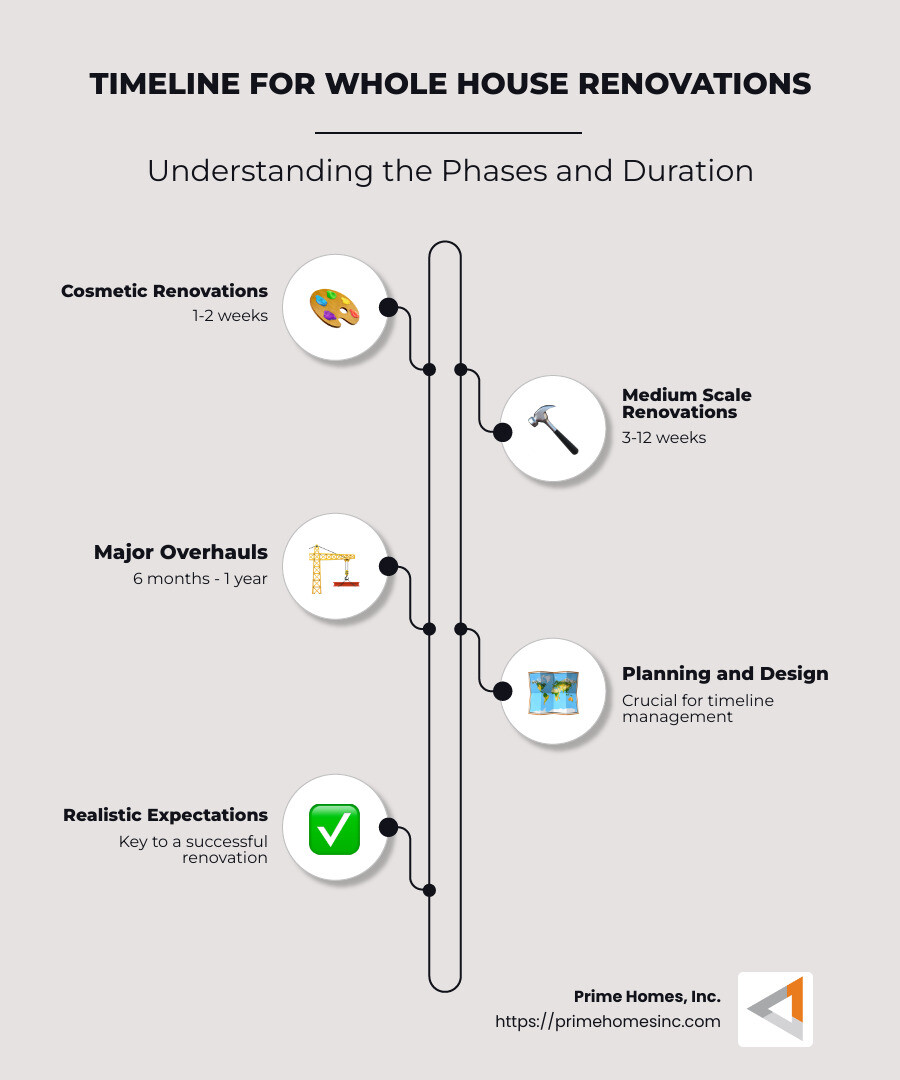
- Cosmetic Renovations: 1-2 weeks
- Medium Scale Renovations: 3-12 weeks
- Major Overhauls: 6 months to over a year
A whole house renovation is a significant undertaking that not only transforms your living space but also improves its functionality and aesthetic appeal. A well-planned renovation can better match your lifestyle and increase the value of your home. However, understanding the expected timeline is crucial for effective planning and setting realistic expectations.
Welcome to Prime Homes, Inc. My name is Jerome Bertuglia, and with over 30 years of experience in the construction industry, I provide clients with expert insights on timelines for whole house renovations. Together with my team, we focus on crafting high-quality, custom luxury homes throughout Central Connecticut. Below, we’ll explore the intricacies of renovation timelines and guide you through planning for your dream home change.
Factors Influencing Renovation Duration
When considering how long will a whole house renovation take, several factors come into play. Let’s break these down to help you understand what might speed up or slow down your project.
Project Scope
The scope of your renovation is a major determinant of the timeline. Are you just giving a facelift to a couple of rooms, or are you tearing down walls and reimagining your entire living space?
- Minor Updates: Simple tasks like painting or changing fixtures might only take a few days to a couple of weeks.
- Medium Projects: Renovations like a kitchen overhaul or adding a new room can stretch from a few weeks to several months.
- Major Overhauls: Extensive projects involving structural changes might take several months to over a year.
For example, a comprehensive renovation we completed recently, which included a kitchen remodel and smart-home upgrades, took about 1 year and four months.
Home Size
The size of your home also plays a crucial role. Larger homes naturally require more time to renovate due to the increased amount of work involved.
- Small Homes: Easier to manage and usually quicker to complete.
- Large Homes: Expect longer timelines due to more spaces needing attention.
Design Complexity
Complex designs often mean more time. Intricate details, custom features, and high-end materials can extend your timeline.
- Simple Designs: Quicker to execute with standard materials.
- Complex Designs: Require more time for custom orders and detailed work.
For instance, custom cabinetry and specialty tiles can take longer to arrive, potentially delaying progress.
Permits
Permits can be a hidden timeline factor. Depending on your location, obtaining the necessary permits for structural changes can add weeks or even months to your timeline.
- Simple Projects: May not require permits.
- Complex Projects: Structural changes or expansions will need permits, which can take time to process.
Contractor Availability
The availability of skilled contractors can also influence your renovation’s duration. High demand can mean longer waits for the right team.
- Available Contractors: Can start work sooner, leading to a quicker project.
- Busy Contractors: Might delay your start date, extending the timeline.
Hiring the right professionals is crucial. They bring expertise and efficiency, helping to avoid costly mistakes and delays. Always check credentials and references to ensure quality work.
By understanding these factors, you can better plan your renovation and set realistic expectations. Up next, we’ll dive deeper into the phases of a whole house renovation, breaking down each step for a smoother journey.
How Long Will a Whole House Renovation Take?
When starting on a whole house renovation, it’s crucial to set realistic expectations about the timeline. Knowing the average timelines and understanding the different phases of renovation can help you plan better and reduce stress.
Average Timelines
The duration of a renovation can vary widely based on several factors. On average, a whole house renovation can take anywhere from 6 months to over a year. Here’s a quick breakdown:
- Cosmetic Updates: If you’re just updating fixtures and finishes, expect this to take a few weeks to a couple of months.
- Moderate Renovations: Projects like kitchen or bathroom remodels typically range from 3 to 6 months.
- Major Overhauls: Full-scale renovations involving structural changes can take 9 months to 18 months or even longer.
A recent project we handled involved a complete overhaul, including smart-home integrations, and took approximately 16 months to complete.
Phases of Renovation
Breaking down the project into phases can give you a clearer picture of the timeline. Here’s what to expect at each stage:
- Initial Planning and Design Phase: This is where it all begins. Architectural design can take 1 to 3 months, depending on complexity. Overlapping the bidding process with design can save time, taking an additional 2 to 3 weeks.
- Permitting Phase: Obtaining necessary permits can add about 1 month to your timeline. This step ensures all legal requirements are met before construction starts.
- Construction Phase:
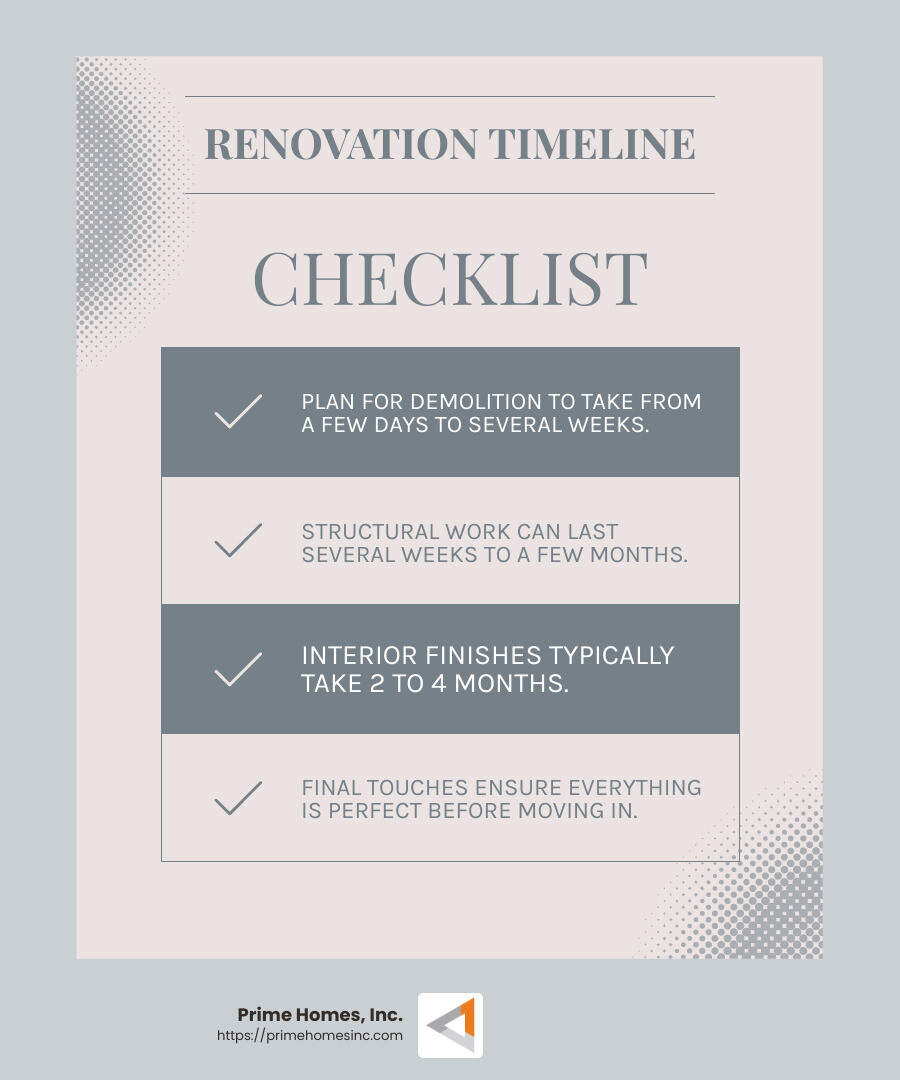
- Demolition: Depending on the extent, this can last from a few days to several weeks.
- Structural Changes: Adding or removing walls can take several weeks to a few months.
- Utilities Installation: Updating plumbing, electrical, and HVAC typically takes 1 to 2 months.
- Interior Finishing: This is where your vision comes to life, lasting 2 to 4 months. It includes drywall, flooring, and painting.
- Final Touches: The last phase involves installing fixtures and making final adjustments, ensuring everything is perfect before you move back in.
Setting Realistic Expectations
Understanding these phases helps in setting realistic expectations. Unforeseen delays like bad weather or material backorders can occur. Being prepared and flexible can make a significant difference.
- Weather Conditions: Plan outdoor work during favorable weather to avoid delays.
- Material Backorders: Order materials early and have backup options to keep the project on track.
By knowing what to expect and planning accordingly, you can steer the renovation process more smoothly. Next, we’ll explore the detailed phases of a whole house renovation, providing more insights into each step.
Detailed Phases of a Whole House Renovation
Renovating a whole house is like orchestrating a complex symphony. Each phase plays a crucial role in bringing the entire project together. Let’s break down these phases to understand what each entails.
Planning and Design
This phase is the foundation of your renovation. It usually takes 1 to 3 months and involves detailed architectural design. You’ll work closely with architects to finalize your plans. During this time, you can also start the bidding process, which can overlap and take an additional 2 to 3 weeks.
Key Steps:
– Architectural Design: Create drafts and finalize plans.
– Bidding: Review bids from subcontractors to get the best value.
– Permitting: Allocate about 1 month to secure necessary permits from local authorities.
Demolition
Once the plans are set, it’s time to clear the way for new beginnings. Demolition can vary in duration, from a few days to several weeks, depending on the scope of the renovation. Whether it’s removing old fixtures or gutting entire rooms, this phase sets the stage for new construction.
Key Steps:
– Scope Assessment: Determine the extent of demolition needed.
– Execution: Safely remove unwanted structures and materials.
Structural Work
This phase involves significant changes to the house’s framework. Structural work can take several weeks to a few months. It includes tasks like framing new walls or removing existing ones, which are critical for altering the layout.
Key Steps:
– Framing: Build or remove walls as per the new design.
– Structural Adjustments: Ensure the foundation and structure are sound.
Interior Finishes
Now comes the exciting part—bringing your design to life. Interior finishes can take 2 to 4 months and include everything from drywall installation to painting. This phase transforms the bare bones of your house into a livable space.
Key Steps:
– Drywall and Flooring: Install and finish walls and floors.
– Painting and Fixtures: Add color and install fixtures to improve aesthetics.
Final Touches
The last phase ensures everything is perfect before you move in. This includes installing final fixtures and making any necessary adjustments. Although it might seem minor, it is crucial for making the house feel complete.
Key Steps:
– Fixture Installation: Set up lighting, appliances, and other final touches.
– Quality Check: Ensure everything aligns with the initial goals.
Managing Delays
Even with meticulous planning, unexpected delays can occur. Here are some common issues and how to manage them:
- Weather Conditions: Plan outdoor tasks for favorable weather.
- Material Backorders: Order materials early and have alternatives ready.
Understanding these phases not only helps in setting realistic expectations but also in managing your renovation effectively. By staying informed and prepared, you can ensure a smoother renovation journey.
Next, we’ll dive into tips for a smooth renovation process, providing practical advice to keep your project on track.
Tips for a Smooth Renovation Process
Renovating your home can be a thrilling journey, but it also comes with its challenges. Here are some tips for a smooth renovation process to help you steer each step with ease.
Communication
Clear communication is the backbone of any successful renovation. It ensures everyone involved is on the same page.
- Regular Updates: Schedule weekly meetings with your contractor to discuss progress and address any concerns.
- Open Dialogue: Encourage open communication with all team members. This helps catch issues early and keeps the project on track.
- Documentation: Keep a record of all communications, including emails and meeting notes, to avoid misunderstandings.
Budgeting
A well-thought-out budget is crucial for keeping your renovation on track financially.
- Set a Realistic Budget: Determine how much you can afford and allocate funds to different parts of the project. Always include a contingency fund of 10-20% for unforeseen expenses.
- Track Expenses: Regularly monitor spending to ensure you stay within budget. Use apps or spreadsheets to keep an eye on costs.
- Prioritize Needs: Focus on essential improvements first. If the budget tightens, you can always delay less critical upgrades.
Flexibility
Flexibility is key when dealing with the unpredictable nature of renovations.
- Expect the Unexpected: Be prepared for surprises like hidden structural issues or material delays.
- Adapt Plans: If something doesn’t go as planned, be ready to adjust your timeline or budget.
- Stay Positive: A flexible mindset helps maintain morale and keeps the project moving forward.
Choosing the Right Contractor
Selecting the right contractor can make or break your renovation.
- Check Credentials: Ensure your contractor is licensed and insured. This protects you from legal issues and ensures they meet local standards.
- Ask for References: Speak with past clients to gauge the contractor’s reliability and quality of work. As one satisfied client noted, “Max keeps his guys on their toes… the job was finished quicker than I expected and with quality.”
- Experience Matters: Choose a contractor with a proven track record in projects similar to yours. Their experience can help avoid costly mistakes.
By focusing on these critical areas, you can pave the way for a successful renovation. Next, we’ll address some frequently asked questions about whole house renovations, providing further insights to help you along your renovation journey.
Frequently Asked Questions about Whole House Renovations
What is the average cost of a whole house renovation?
The cost of a whole house renovation can vary widely. Factors like the size of your home, the scope of the project, and the quality of materials used all impact the final price. Generally, you can expect to spend anywhere from $100,000 to $300,000 or more.
To budget effectively:
- Break Down Costs: Understand expenses for each part of the renovation, such as kitchen, bathroom, and living areas.
- Include Contingency Funds: Allocate an extra 10-20% of your budget for unexpected costs. This helps cover surprises like hidden water damage or outdated wiring.
- Focus on High-Impact Areas: Kitchens and bathrooms often offer the best return on investment, so prioritize these spaces if budget is tight.
How can I minimize delays during renovation?
Delays can be frustrating, but with careful planning, you can minimize them:
- Project Management: Stay organized by keeping a detailed timeline and checklist for each phase of the renovation.
- Scheduling: Coordinate with your contractor to ensure all materials and permits are ready before starting. Avoid seasonal delays by planning work during off-peak times.
- Regular Check-Ins: Frequent communication with your contractor helps identify potential issues early on. This proactive approach can prevent small problems from becoming major delays.
What should I consider when hiring a contractor?
Choosing the right contractor is crucial for a successful renovation. Here’s what to look for:
- Credentials: Ensure the contractor is licensed and insured. This not only protects you legally but also assures they meet local building standards.
- References: Ask for references from past clients to gauge the contractor’s reliability and quality of work. One client shared, “Prime Homes turned our vision into reality with impeccable attention to detail and constant communication.”
- Experience: Look for a contractor with experience in projects similar to yours. Experienced contractors often have better problem-solving skills and can deliver higher quality work.
By addressing these questions, you can better prepare for your renovation journey. Keep these tips in mind to ensure a smoother and more efficient process.
Conclusion
Starting on a whole house renovation is a journey that transforms your living space into a reflection of your personal style and needs. With careful planning and realistic expectations, you can steer this process smoothly. We’ve explored the factors influencing renovation timelines, the phases of a renovation, and tips for minimizing delays. By understanding these elements, you can make informed decisions and enjoy the change of your home.
Prime Homes, Inc. is here to support you every step of the way. As a luxury home builder based in central Connecticut, we specialize in crafting personalized, high-quality living spaces. Our commitment to exceptional craftsmanship and client collaboration ensures your renovation is completed to the highest standards.
Whether you’re in Avon, Bloomfield, Canton, or any of our other service areas, we are ready to turn your vision into reality. Visit our Complete Guide to Whole House Renovations Services to learn more about how we can help you achieve your dream home.
Let’s build something amazing together!
