

How Much Does It Cost to Renovate a Whole House: 10 Vital Tips
How much does it cost to renovate a whole house? A clear picture emerges when considering an average expense range between $30,000 to $120,000 for a comprehensive change. This estimated cost does not include optional attic or basement renovations, which can add significant value and expense.
When starting on a whole house renovation, understanding the financial implications is crucial for budgeting and planning. It’s essential to consider the hidden costs, such as structural repairs, code compliance upgrades, and fluctuations in material prices that can quickly inflate your budget. An expert tip is to incorporate a contingency fund of around 10-20% to manage these unexpected expenses effectively.
I’m Jerome Bertuglia, and with over 30 years of experience in custom luxury home building in Connecticut, I’ve seen the financial planning necessary to transform a house into a dream home. How much does it cost to renovate a whole house is a common question I address, ensuring clients are well-prepared for this journey. Now, let’s dig deeper into understanding the general costs and factors that play into your renovation budget.
Similar topics to how much does it cost to renovate a whole house:
– home improvement costs
– house remodeling contractor
– renovation cost calculator
How Much Does It Cost to Renovate a Whole House?
Renovating a whole house can be a significant investment, and understanding the costs involved is key to planning effectively. On average, the cost to renovate a whole house ranges from $20,000 to $100,000. However, this can vary widely based on several factors.
Average Costs and Cost Per Square Foot
The average cost per square foot for a full house renovation typically falls between $15 and $60. This range depends on the scope of the project and the quality of materials used. For more extensive renovations, especially those involving kitchens and bathrooms, costs can rise to $100 to $250 per square foot.
Here’s a quick breakdown of typical renovation costs based on home size:
| Square Feet | Typical Range | Average Cost |
|---|---|---|
| 1,000 | $15,000 – $60,000 | $20,000 |
| 2,000 | $28,000 – $115,000 | $50,000 |
| 3,000 | $40,000 – $160,000 | $75,000 |
Regional Differences
Location plays a significant role in renovation costs. Urban areas with a higher cost of living often see increased labor and material prices. For instance, homes in Connecticut may have different price points compared to those in rural areas. Additionally, historic homes or those in areas with strict building codes can require more expensive compliance measures.
Key Considerations
When planning your renovation, consider these factors:
- Scope and Complexity: Larger, more complex projects cost more.
- Age and Condition of Home: Older homes may need additional work, like electrical or plumbing updates.
- Permit Costs: These can vary based on local regulations.
- Labor Costs: Skilled labor can be a significant portion of your budget.
By understanding these factors, you can better estimate the cost of your renovation project. Planning and budgeting with these considerations in mind will help ensure a smoother renovation process.
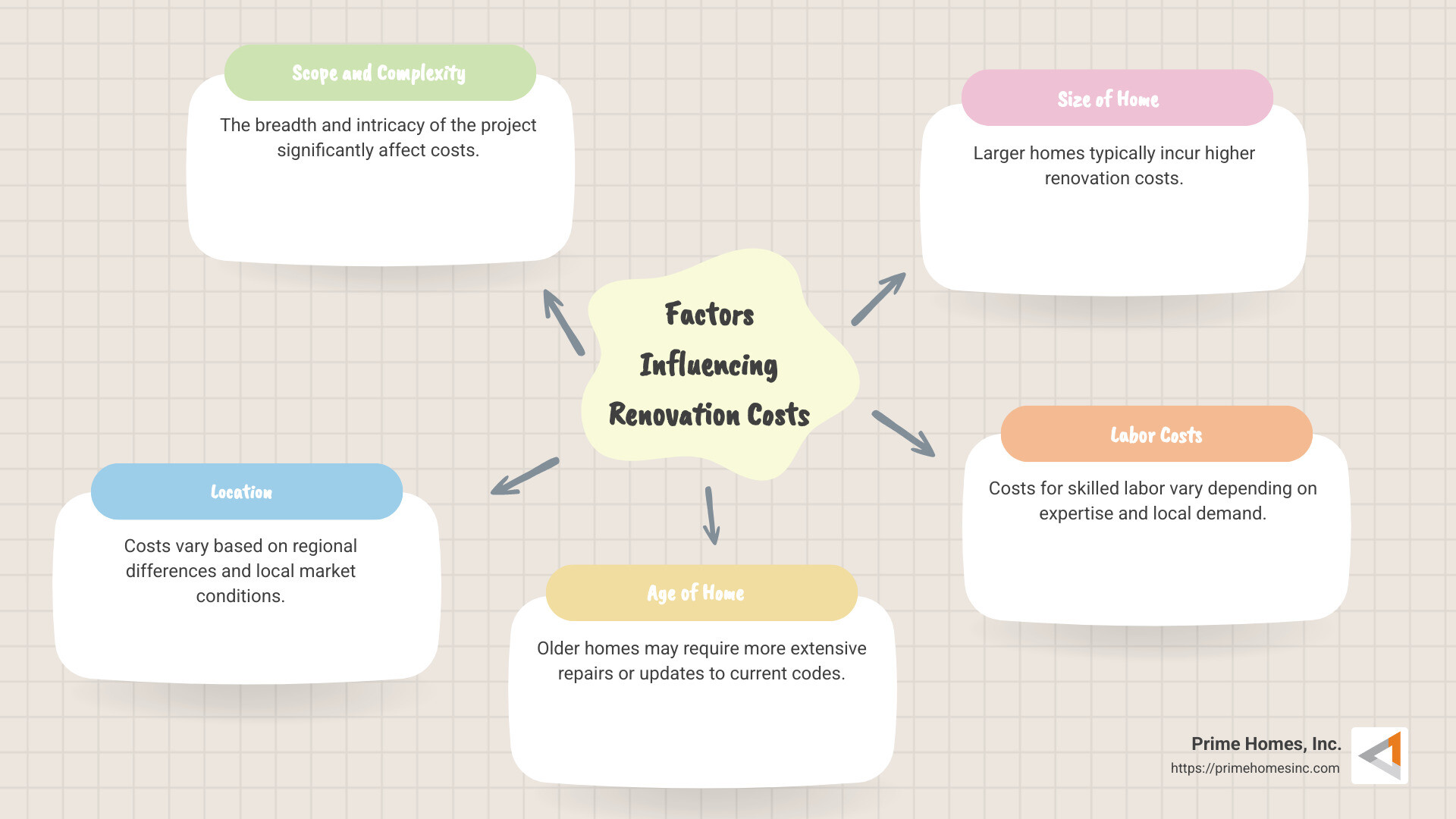
Key Factors Influencing Renovation Costs
When you’re diving into a full house renovation, several key factors can greatly influence the overall cost. Let’s break these down to give you a clearer picture.
Scope and Complexity
The scope and complexity of your renovation project are major cost drivers. A simple refresh with new paint and flooring will cost significantly less than a full-scale remodel involving structural changes. If you’re considering high-end finishes or custom designs, expect the costs to rise.
Location
Where you live impacts renovation costs, sometimes dramatically. In cities like Hartford, CT, labor and material costs can be higher compared to more rural areas. Urban locations often require compliance with stricter building codes, which can add to your expenses.
Age of Home
Older homes often come with hidden issues like outdated wiring, plumbing, or structural damage. These factors can increase renovation costs, as they might require more extensive upgrades to meet current safety standards.
Size of Home
Unsurprisingly, the size of your home plays a big role in determining costs. Larger homes require more materials and labor, which can quickly add up. Renovating a 3,000 sq ft home will naturally be more expensive than a 1,000 sq ft space.
Permit Costs
Don’t overlook permit costs. Depending on your location and the scope of your project, permits can range from a few hundred to several thousand dollars. Failing to secure the necessary permits can lead to fines and delays, so it’s crucial to factor these into your budget.
Labor Costs
Labor is one of the largest expenses in any renovation project. Skilled professionals, from electricians to carpenters, often charge between $50 and $150 per hour. It’s important to hire reputable contractors to ensure quality work, which can save money in the long run by avoiding costly mistakes.
Understanding these factors will help you plan your renovation budget more accurately. Keeping these elements in mind can prevent unexpected surprises and ensure your project stays on track. Next, we’ll explore some cost-saving tips and strategies to help you manage your renovation budget effectively.
High-Cost Areas in Home Renovations
When it comes to renovating your entire home, certain areas tend to require more investment than others. Here’s a closer look at these high-cost areas to help you plan your budget wisely.
Kitchens
Kitchens are often the most expensive part of a home to renovate. This is due to the need for extensive plumbing, electrical work, and high-cost materials like cabinetry and countertops. Depending on your choices, the cost of a kitchen renovation can range from $10,000 to $50,000. Opting for custom cabinetry and high-end appliances can push these costs even higher.
Bathrooms
Bathrooms, much like kitchens, are costly to renovate because they involve plumbing, tiling, and fixtures. The price tag for a bathroom makeover typically falls between $9,000 and $20,000. If you decide to go for luxury finishes or custom installations, expect the expenses to rise significantly.
Living Rooms
While not as complex as kitchens or bathrooms, living rooms can still become pricey. Costs can range from $5,000 to $10,000 depending on your choice of high-end flooring, built-ins, or lighting. Larger spaces or luxurious materials can increase these costs further.
Basements
Changing a basement can be a major project. If your renovation involves waterproofing, structural reinforcements, or adding an egress, costs can range from $12,300 to $33,300. The condition of your existing basement heavily influences the final price.
Exteriors
Updating the exterior of your home can greatly improve its curb appeal. Projects like new siding, roofing, or windows are significant investments. For example, replacing a roof can start at $20,000, depending on the materials and size.
Structural Changes
Any renovation that involves altering your home’s structure, such as removing walls or adding extensions, requires careful engineering and can increase costs. These changes not only demand more labor but also might necessitate updates to your home’s foundation or support system.
Major Installations
Installing major systems like HVAC, electrical, or plumbing across a large house can be one of the biggest expenses. The cost varies widely based on the current state of these systems and your home’s size. These systems are crucial for functionality and can significantly impact your renovation budget.
Understanding these high-cost areas can help you allocate your budget effectively for your home renovation. Next, we’ll dig into some practical cost-saving tips and strategies to help you manage your renovation expenses without compromising on quality.
Cost-Saving Tips and Strategies
Renovating a whole house can be costly, but there are effective strategies to save money without sacrificing quality. Here’s how you can manage your renovation budget wisely:
Budgeting Strategies
- Set a Conservative Budget: Start with a conservative budget and include a contingency fund of at least 20% for unexpected expenses. This helps in managing the average cost to renovate a house without overstretching your finances.
- Get Multiple Quotes: Obtain at least three quotes from different contractors. This allows you to compare services, timelines, and prices, ensuring you get the best deal.
- Prioritize High-Return Investments: Focus on renovations that offer the best return on investment, such as kitchen and bathroom updates, which are known to significantly increase a home’s value.
Cost-Saving Tips
- DIY Where Possible: Consider a DIY approach for simpler tasks like painting or minor installations. This can save labor costs, which typically account for 20% to 35% of the project cost. However, only tackle tasks you’re confident in to avoid costly mistakes.
- Choose Cost-Effective Materials: Opt for standard finishes and materials like vinyl plank flooring, which is budget-friendly and durable. Explore discount warehouses or thrift shops for quality materials at lower prices.
- Time Your Renovation: Plan your renovation during the off-season when contractors may offer lower rates. Also, make decisions early and stick to them to avoid delays and extra costs.
Investment Returns
- Energy-Efficient Upgrades: Invest in energy-efficient renovations, such as new windows or insulation. These upgrades can reduce utility bills and appeal to environmentally-conscious buyers, offering a good return on investment.
- Maximize Existing Space: Transform unused spaces, like basements or attics, into livable areas. This maximizes your home’s square footage and can be more cost-effective than building an addition.
DIY Considerations
While DIY can significantly reduce costs, it’s important to weigh the pros and cons:
- Pros: Lower labor costs, greater control over the project, and personal satisfaction.
- Cons: Time-consuming, risk of errors, and potential need for professional remediation if mistakes occur.
Balancing DIY efforts with professional help can help you manage the cost to renovate a whole house effectively. By applying these tips and strategies, you can steer the renovation process smoothly and achieve your desired results within budget.
Next, we’ll address some frequently asked questions about whole house renovations.
Frequently Asked Questions about Whole House Renovations
Is $50,000 enough to renovate a house?
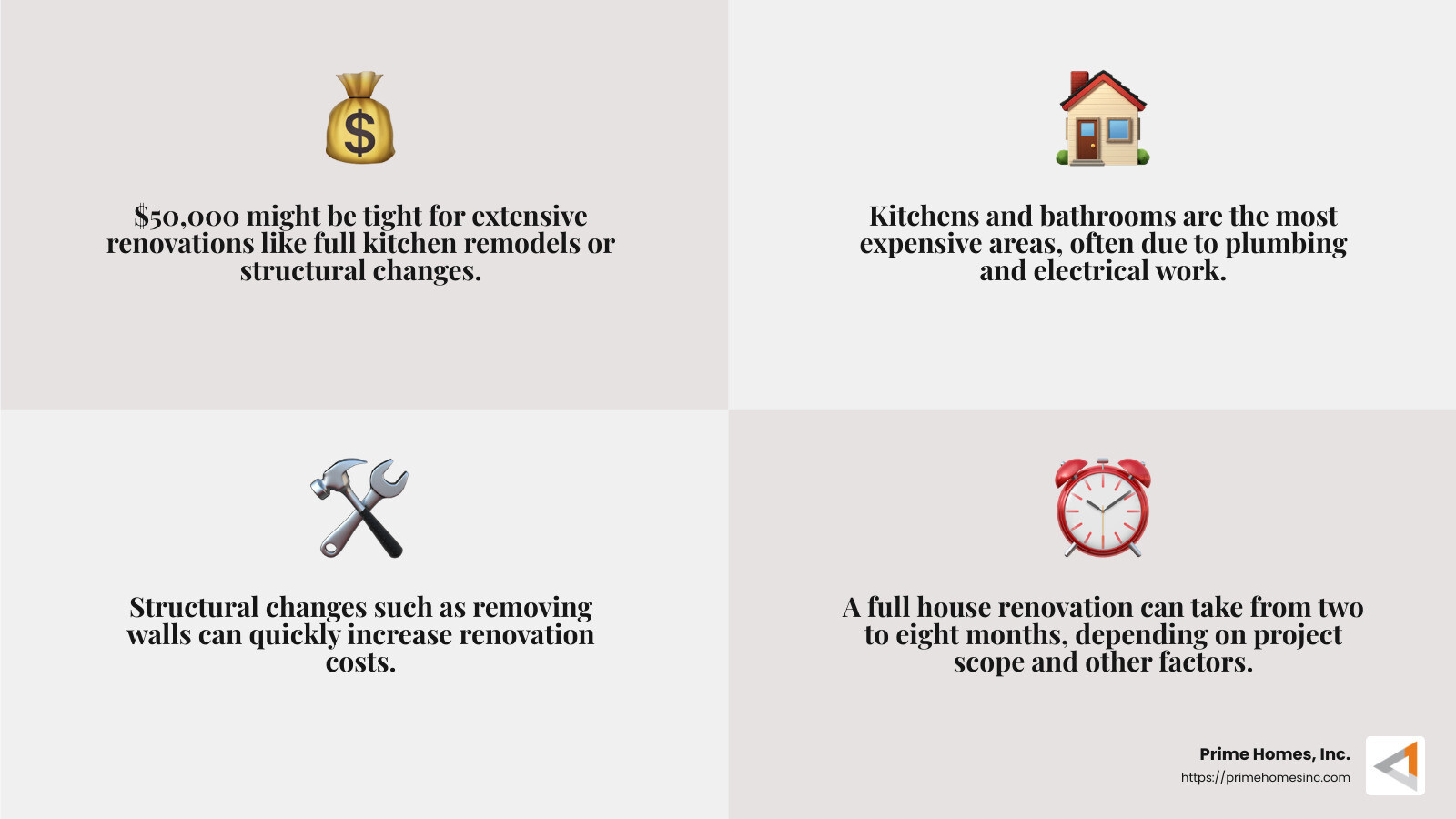
Budget limitations can make or break your renovation plans. $50,000 might sound like a lot, but it can be tight depending on what you want to achieve. For smaller projects or cosmetic upgrades, this budget could work. Think painting, minor kitchen updates, or refreshing the bathroom. But for more extensive renovations, like a full kitchen remodel or structural changes, $50,000 might not stretch far enough.
Project scope is key. Define what you want to achieve and prioritize the most important areas. Kitchens and bathrooms often eat up the most budget. They involve plumbing, electrical work, and costly materials like countertops and appliances. A full kitchen remodel alone can range from $14,500 to $70,000+. If you’re aiming for significant changes, consider focusing on one area at a time or finding cost-saving strategies.
What is the most expensive part of a renovation?
Kitchens and bathrooms are typically the most expensive parts of a renovation. They require specialized work, including plumbing and electrical updates. Kitchens, in particular, can be a budget buster due to high-end appliances and cabinetry. The cost for a kitchen can soar between $10,000 to $50,000 or more, depending on your choices.
Structural changes also add to the expense. If you’re removing walls or making significant alterations to your home’s layout, expect to pay more. These changes require careful planning and often involve updating the home’s foundation or support systems, which can quickly inflate costs.
How long does a full house renovation take?
The timeline for a full house renovation can vary widely. If you’re planning a minor remodel, you might only need a few weeks. However, for extensive projects, expect anywhere from two to eight months. Factors like the availability of contractors, material procurement, and the complexity of the work all play a role in the duration.
Project scope is a major determinant. Larger projects with multiple rooms or significant structural changes will naturally take longer. It’s also wise to build in some buffer time for unexpected delays, like permit issues or weather disruptions.
By understanding these factors, you can better plan your renovation and manage your expectations around budget and timeline.
Conclusion
Renovating your entire house is a big decision, and at Prime Homes, Inc., we understand it’s more than just a construction project—it’s about changing your living space into something truly special. Our commitment to personalized service means we work closely with you every step of the way, ensuring your renovation reflects your unique vision and lifestyle.
Quality craftsmanship is at the heart of everything we do. We use only the finest materials and employ skilled artisans who are passionate about their craft. This dedication ensures that your home not only looks beautiful but also stands the test of time.
We believe in transparent processes. Clear communication and honest pricing are key to a successful renovation journey. We keep you informed throughout the project, so there are no surprises along the way. Our detailed planning and open dialogue help ensure that your renovation stays on track and within budget.
Choosing Prime Homes, Inc. means partnering with a team that values your ideas as much as you do. We’re here to help you bring your dream home to life, with a focus on creating spaces that are as functional as they are stunning.
Ready to start on your renovation journey? Find how we can help you transform your house into a luxurious retreat. Let’s create something amazing together!
