

Interior Home Remodeling: 7 Stunning Ideas for 2025
Interior home remodeling is your chance to transform a house into a masterpiece of modern aesthetics and functional design. Whether you’re envisioning open spaces that invite natural light, incorporating smart technology for convenience, or integrating eco-friendly materials, the possibilities are as exciting as they are endless.
- Modern aesthetics: Clean lines, minimalistic design, and contemporary decor.
- Functional design: Maximizing utility by combining convenience with luxury.
- Open concept living: Creating fluid spaces that encourage interaction.
- Smart home integration: Using technology to improve everyday living.
- Eco-friendly upgrades: Sustainable materials and energy-efficient design.
As an expert in interior home remodeling, I’m here to guide you through changing your vision into reality. My journey spans over 30 years as the owner of Prime Homes, Inc., where high-quality craftsmanship and custom designs meet to create timeless homes.
Let’s dig into the essentials of turning your interior spaces from drab to fab.
Quick look at interior home remodeling:
– home remodel
– house remodeling contractor
– home improvement costs
Understanding Interior Home Remodeling
When it comes to interior home remodeling, it’s important to grasp the difference between renovation and remodeling. Although these terms are often used interchangeably, they involve distinct processes and outcomes.
Renovation vs. Remodeling
Renovation is all about updating or restoring a space to improve its appearance or functionality without altering its structure. Think of it as giving your home a facelift. Common renovation tasks include repainting walls, replacing fixtures, or updating kitchen cabinets. It’s about refreshing the look and feel of your home while keeping the existing layout intact.
Remodeling, on the other hand, involves making significant changes to a space’s structure or layout. This could mean knocking down walls to create an open-concept kitchen or adding a new room. Remodeling transforms your home to better suit your needs and tastes, often involving more extensive work and a larger budget.
Structural Changes
Structural changes are a hallmark of remodeling projects. These changes can drastically alter the layout and functionality of your home. For example:
- Knocking Down Walls: Create an open-concept living area to improve flow and light.
- Adding Rooms: Introduce new spaces like a bedroom, bathroom, or home office.
- Changing Floor Plans: Improve the overall functionality and appeal of your home.
A family in Hartford, CT, opted for a structural remodel by removing the wall between their kitchen and dining room. This change not only modernized their home but also increased its market value by creating a more spacious and inviting area.
Design Change
Design change is where creativity shines in interior home remodeling. This involves redesigning spaces to reflect your personal style and improve functionality. Here are a few ideas:
- Modern Aesthetics: Incorporate clean lines and contemporary decor to create a sleek look.
- Functional Design: Maximize utility by combining convenience with luxury elements.
- Eco-Friendly Upgrades: Use sustainable materials and energy-efficient features to reduce your carbon footprint.
Design change isn’t just about aesthetics; it’s about creating a home that fits your lifestyle. Whether you want a smart home with the latest technology or a peaceful retreat with natural elements, the design possibilities are endless.
Interior home remodeling is a journey of change, turning your home into a space that truly reflects your vision and meets your needs. As you start on this journey, the right blend of renovation, remodeling, and design change can lift your living space from drab to fab.
Planning Your Interior Home Remodeling Project
Planning is key to a successful interior home remodeling project. It involves setting a budget, collaborating on design, and securing necessary permits. Let’s explore these critical steps.
Budget Planning
Before diving into your remodeling project, it’s crucial to set a realistic budget. Start by examining your finances to determine how much you can comfortably spend. Include costs for materials, labor, and permits. Don’t forget to set aside a buffer for unexpected expenses—around 10-20% extra is a good rule of thumb.
Example: The Smiths, a family in Hartford, CT, set a budget of $20,000 for their kitchen renovation. They allocated $15,000 for materials and labor and kept $5,000 as a contingency fund. This approach helped them stay on track financially.
Design Collaboration
Collaboration is key when it comes to design. Work with professionals who understand your vision and can bring it to life. Gather inspiration from magazines, websites, and platforms like Pinterest. Consider your home’s architectural style to ensure that the new design complements it.
Tip: Prioritize your needs and wants. For example, focus on updating old appliances and cabinets before adding new features like a kitchen island. This helps manage costs and ensures the most important elements are addressed first.
Securing Permits
Don’t overlook the importance of securing the necessary permits. Even small renovations might require them. Skipping this step can lead to fines and complications when selling your home. Always check local regulations before starting any project.

Working with a contractor who knows local regulations can ease this process. They can apply for and submit permits on your behalf, ensuring everything is up to code. Permits are not just bureaucratic problems—they ensure that your remodeling project is safe and compliant.
By focusing on these key areas—budget planning, design collaboration, and securing permits—you’ll lay a solid foundation for your interior home remodeling project. With careful planning, you can transform your space into a home that reflects your style and meets your needs.
Next, let’s explore the step-by-step process of interior home remodeling to understand what each stage involves.
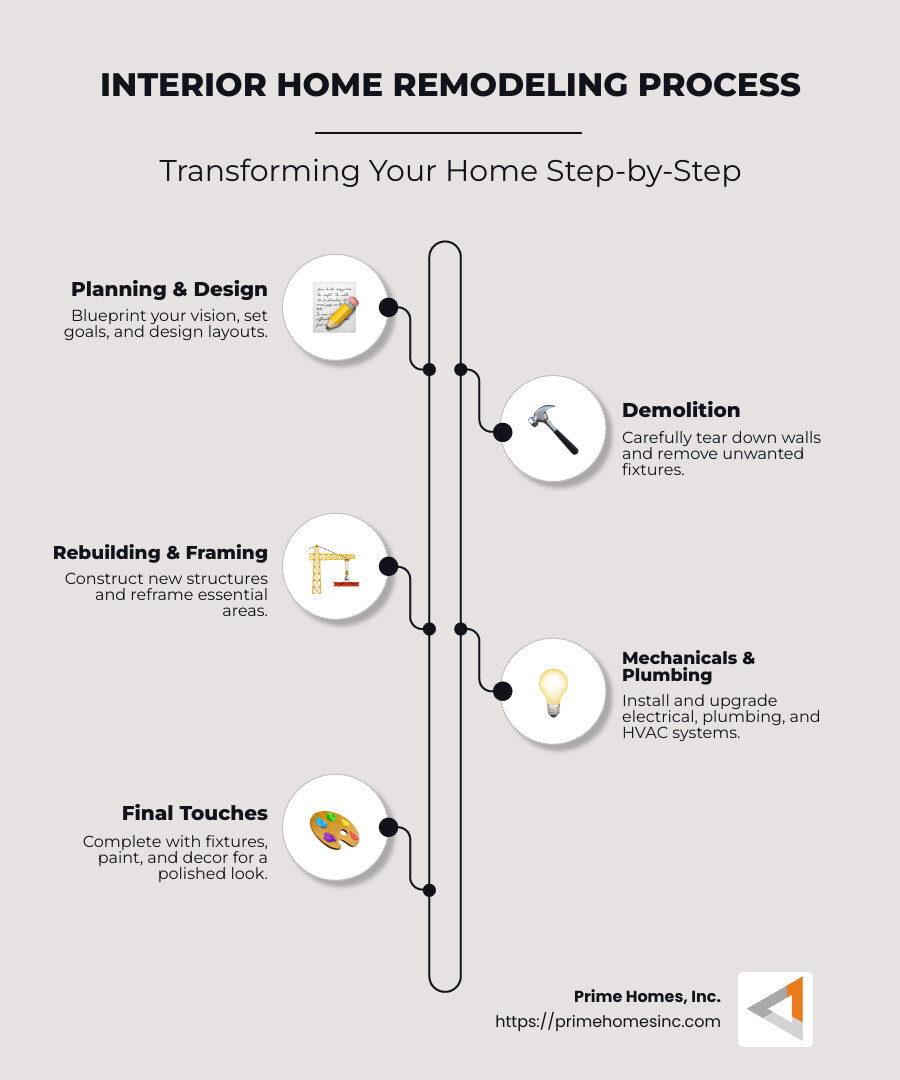
Step-by-Step Interior Home Remodeling Process
Starting on an interior home remodeling project can seem overwhelming. But breaking it down into manageable steps can make the process smoother. Here’s a step-by-step guide to help you transform your home.
1. Planning and Design
The first step in any successful remodeling project is planning and design. This involves more than just picking out new paint colors. It’s about creating a cohesive plan that matches your vision and budget. Collaborate with designers to create a blueprint that includes everything from layout changes to material selection.
Tip: Use tools like Room Scan to create accurate floor plans. This can help visualize changes and ensure every detail aligns with your vision.
2. Demolition
Once the design is set, it’s time for demolition. This can range from removing old fixtures to tearing down walls. It’s an exciting phase, as you start to see the old make way for the new.
Safety First: Ensure proper safety measures are in place. Wear protective gear and clear the area of any hazards before starting.
3. Rebuilding/Framing
After demolition, the rebuilding begins. Framing is essential, as it defines the new structure of your space. Whether adding new rooms or reconfiguring existing ones, this step lays the foundation for your new design.
4. Mechanicals/Plumbing/HVAC/Electrical
This step involves installing or updating the “behind the scenes” systems. Ensure that plumbing, HVAC, and electrical systems are up to code and meet your needs. This is crucial for a safe and functional home.
Fact: Updating these systems can improve energy efficiency, saving you money on utility bills in the long run.
5. Walls
With framing and mechanicals in place, it’s time to put up walls. Drywall installation includes taping, mudding, and sanding to create a smooth surface ready for finishing touches.
Pro Tip: Many contractors prefer to paint at this stage to avoid drips on final finishes, ensuring a clean look.
6. Flooring
Flooring is a key element in tying your design together. Whether you choose hardwood, tile, or carpet, this step adds both style and comfort to your home.
Consideration: Some contractors wait until painting is complete to install flooring, ensuring a pristine finish.
7. Cabinets
Installing cabinets is a pivotal moment in your remodeling journey. Whether in the kitchen or bathroom, cabinets add functionality and define the room’s structure.
8. Appliances
With cabinets in place, it’s time to install appliances. This step makes your space functional, allowing you to start using your new kitchen or laundry room.
Example: The Smiths installed energy-efficient appliances in their Hartford, CT home, reducing their energy bills and enhancing their kitchen’s functionality.
9. Final Touches
The final touches bring your vision to life. Add backsplashes, fixtures, and accessories to personalize your space. This is where your home truly becomes your own.
Inspiration: Use platforms like Pinterest to gather ideas for decor and finishes that reflect your style.
By following these steps, you can steer the interior home remodeling process with confidence. Each stage is essential for creating a home that is both beautiful and functional.
Next, let’s explore some top interior home remodeling ideas to inspire your project.
Top Interior Home Remodeling Ideas
Interior home remodeling can transform your living space into something extraordinary. Here are some of the top ideas to consider when planning your next project:
Open Concept Living
Open concept living is all about removing barriers. By knocking down walls, you create a larger, more inviting space. This setup allows for seamless interaction between the kitchen, dining, and living areas. It’s perfect for hosting gatherings or simply enjoying more space.
Example: The Johnsons in West Hartford, CT, transformed their cramped layout into an open concept design, allowing natural light to flood their home and creating a more spacious feel.
Smart Home Integration
Incorporating smart technology can lift your home to the 21st century. Imagine controlling lights, thermostats, and security systems all from your phone. Smart home integration not only adds convenience but can also improve energy efficiency.
Stat: Homes with smart technology can sell for 5% more than those without, according to a national real estate study.
Energy-Efficient Upgrades
Going green is more than a trend; it’s a smart investment. Energy-efficient upgrades can include installing double-pane windows, adding insulation, or upgrading to energy-efficient appliances. These changes can significantly reduce your utility bills.
Fact: Energy-efficient homes can sell for 3-5% more than less efficient homes, making this a wise investment for the future.
Modernize Bathrooms
Changing your bathroom into a modern oasis can improve both function and style. Consider adding sleek fixtures, a rainfall showerhead, or a freestanding bathtub for a touch of luxury. Modern tiles and eco-friendly options can also make a big impact.
Tip: Installing water-saving fixtures like low-flow showerheads can decrease water bills and conserve resources.
Room-by-Room Remodeling
Tackling your home one room at a time can make the remodeling process more manageable. Start with the room that needs the most attention. Whether it’s updating an outdated kitchen or refreshing a tired living room, room-by-room remodeling allows you to focus your efforts and budget effectively.
Inspiration: The Thompsons in Simsbury, CT, decided to remodel their home room by room, starting with the kitchen. This approach allowed them to stay on budget and enjoy each newly renovated space as they progressed through their home.
These interior home remodeling ideas can breathe new life into your home. Whether you’re looking to create an open concept, integrate smart technology, or simply update one room at a time, these ideas provide a foundation for changing your living space into something truly special.
Next, let’s explore some budget-friendly tips to make your interior home remodeling project more affordable.
Budget-Friendly Interior Home Remodeling Tips
Remodeling your home doesn’t have to break the bank. With a few smart strategies, you can achieve a stunning change without overspending.
Affordable Updates
Start with simple, cost-effective changes that can have a big impact. A fresh coat of paint can instantly update any room. Opt for neutral tones that add a modern touch and appeal to a wide audience.
Tip: Replacing outdated light fixtures or cabinet hardware is another affordable way to refresh your space. These small changes can give your home a contemporary feel without a hefty price tag.
Second-Hand Finds
Don’t overlook the value of second-hand treasures. Thrift stores, garage sales, and online marketplaces can be goldmines for unique furniture and decor. Often, these pieces have character and charm that new items lack.
Example: The Martins in Avon, CT, furnished their living room with vintage finds, creating a cozy and eclectic space for a fraction of the cost of new furniture.
Focus on Key Areas
Prioritize the rooms that will give you the most return on investment. Kitchens and bathrooms are often the most impactful areas to remodel. Even small updates in these spaces can significantly boost your home’s value.
Fact: According to real estate experts, kitchen and bathroom renovations offer some of the highest returns, making them wise choices for budget-friendly remodeling.
By focusing on affordable updates, seeking out second-hand finds, and concentrating on key areas, you can transform your home without overspending. These tips ensure that your interior home remodeling project stays within budget while still delivering impressive results.
Frequently Asked Questions about Interior Home Remodeling
What is the difference between remodeling and renovating a house?
Renovation and remodeling are terms often used interchangeably, but they have distinct meanings. Renovation involves restoring a space to its original state, often focusing on repairs and updates. Think of it as refreshing a room—like repainting walls or replacing fixtures.
Remodeling, however, is about change. It involves changing the structure or layout of a space. This could mean knocking down walls to create an open concept living area or adding a new room. Remodeling is more about creating something new, rather than fixing what’s old.
Is $20,000 enough to remodel a house?
The budget for a home remodel can vary greatly depending on the scope and location. On average, homeowners spend about $50,000, but a smaller budget like $20,000 can still make a significant impact.
Tip: Focus on key areas that offer the highest return on investment, such as kitchens and bathrooms. You might not be able to tackle a whole-house remodel, but you can make impactful changes in these spaces.
30% Rule: Allocate no more than 30% of your budget to any single project to ensure funds are available for unexpected costs.
What are some eco-friendly and stylish renovation ideas?
Incorporating sustainable materials and energy-efficient upgrades can make your home both stylish and eco-friendly. Consider using bamboo flooring or recycled materials for countertops. These choices are not only good for the environment but also add a unique touch to your home.
Energy-Efficient Upgrades: Install energy-efficient windows and appliances to reduce your carbon footprint and utility bills. Solar panels are another great option for sustainable energy.
Biophilic Design: Improve your connection with nature by integrating large windows for natural light and adding indoor plants. This design approach can improve mental well-being and create a calming atmosphere in your home.
By understanding the differences between renovating and remodeling, budgeting wisely, and opting for eco-friendly upgrades, you can achieve a successful interior home remodeling project that meets both your aesthetic and functional needs.
Conclusion
At Prime Homes, Inc., we pride ourselves on creating personalized living spaces that truly reflect your individual vision and lifestyle. Our focus on exceptional craftsmanship ensures that every detail of your home is crafted to the highest standards.
Our approach is all about collaboration. We work closely with you to understand your needs and desires. Whether you dream of a modern open concept living area or a cozy, energy-efficient home, we bring your vision to life with precision and care.
Our commitment to quality means we don’t just build houses; we create homes. Homes that are as unique as you are. With our expertise, your interior home remodeling project becomes an exciting journey towards a space that is both functional and beautiful.
Ready to transform your home from drab to fab? Explore our services and learn how we can help you achieve your dream home. Visit our Complete Guide to Whole House Renovations Services to get started on your journey with Prime Homes, Inc. Let’s build something amazing together.
