

Renovating a Whole House: 5 Crucial Tips for Success
Renovating a whole house can be an exhilarating yet daunting endeavor. At its core, success hinges on thoughtful planning and setting a clear vision with specific goals. Here’s a brief guide to get you started on this transformative journey:
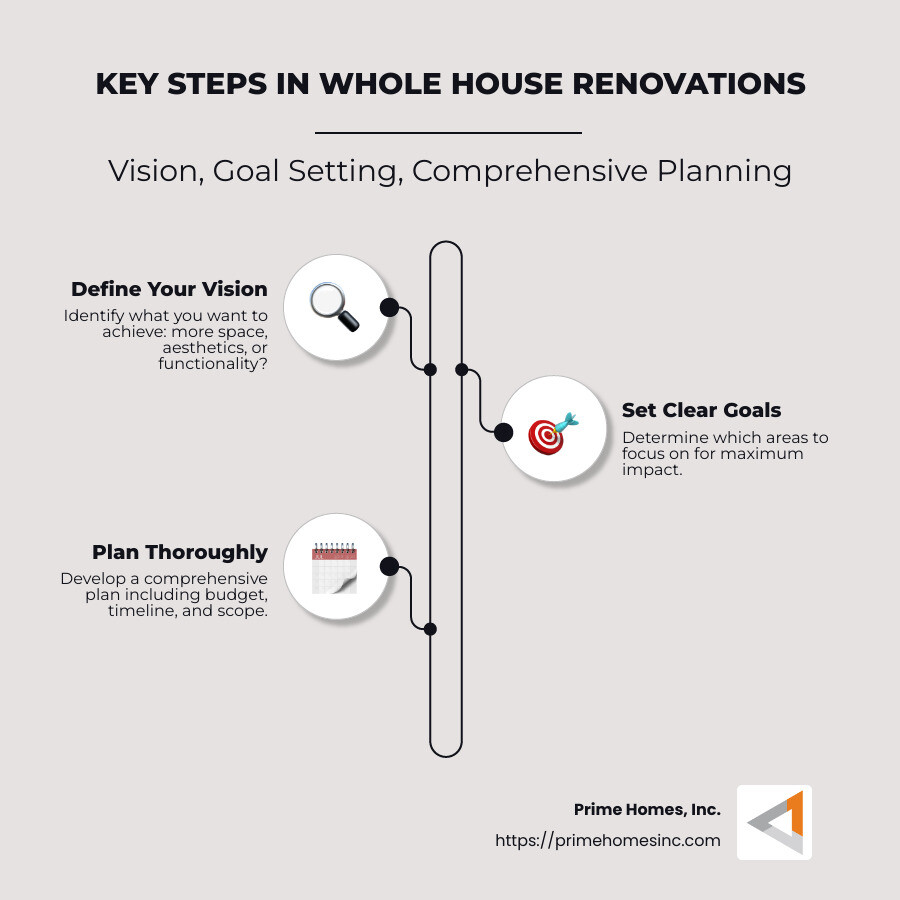
- Define Your Vision: Identify what you want to achieve with your renovation. More space, updated aesthetics, or improved functionality?
- Set Clear Goals: Establish what needs to be changed and which areas to focus on for maximum impact.
- Plan Thoroughly: Develop a comprehensive plan that includes budget, timeline, and scope to avoid unforeseen pitfalls.
As the owner of Prime Homes, Inc., I’ve spent over 30 years immersed in the intricacies of renovating a whole house. Our commitment is to turn visions into realities, creating spaces that reflect personal style and functional elegance.
Terms related to renovating a whole house:
– home renovation
– house remodeling contractor
– renovation cost calculator
Renovating a Whole House: Key Considerations
Budgeting Wisely
When renovating a whole house, the first thing to nail down is your budget. It’s your roadmap. Without it, you might find yourself in a financial rabbit hole. Elizabeth Dodson, co-founder of HomeZada, warns that overbuilding can be a costly mistake.
Here’s a quick guide to budgeting:
- Estimate Costs: Include permits, materials, labor, and a 10-20% buffer for surprises.
- Prioritize: Decide what’s essential and what can wait. Kitchens and bathrooms often give the best return on investment.
- Get Quotes: Obtain estimates from multiple contractors to ensure you’re getting the best deal.
Setting a Realistic Timeline
A timeline keeps your project on track. Start planning 6 to 12 months before you intend to begin. This allows ample time for research, hiring, and permits. Delays can happen, especially with permits and materials.
- Plan Ahead: Factor in time for permits and inspections.
- Stay Flexible: Be prepared for unexpected delays. Monitor progress regularly to catch issues early.
Navigating Permits
Permits can be a tricky part of renovating a whole house. Not having one when needed can halt your project. Always check local regulations.
- Research Early: Know what permits you need before starting. Common ones include electrical, plumbing, and structural changes.
- Leave it to the Pros: Contractors often handle permits, but double-check everything is in order.
DIY vs. Hiring Professionals
Decide what you can handle yourself and what requires a pro. While doing it yourself can save money, some tasks are best left to experts.
- DIY-Friendly Tasks: Painting, minor demolition, and installing fixtures.
- Hire Pros For: Electrical, plumbing, and structural changes. These require expertise and, often, permits.
Here’s a quick comparison:
| DIY | Hiring Pros |
|---|---|
| Cost-effective | Expertise guaranteed |
| Flexible schedule | Efficient and timely |
| Limited to simple tasks | Handles complex projects |
The Smiths learned the value of consulting a professional when they updated their 1960s kitchen. Initially planning a full remodel, they saved money by focusing on essential updates instead.
In summary, renovating a whole house requires careful budgeting, a realistic timeline, understanding of permits, and knowing when to call in the pros. With these key considerations in mind, you’re well on your way to a successful renovation project.
Step-by-Step Guide to Whole House Renovations
Starting on the journey of renovating a whole house can be daunting. But with clear steps, it becomes manageable and even enjoyable. Here’s a straightforward guide to help you steer through the process.
1. Set Clear Goals
Before you start, know what you want to achieve. Do you need more space, better functionality, or a fresh look? Setting goals helps focus your efforts and resources.
- Define Your Vision: Think about how each room should function and feel.
- Prioritize Needs: Decide on must-haves versus nice-to-haves.
Example: The Smiths aimed to open up their kitchen for more light and space, changing it into a family-friendly area.
2. Create a Budget
A well-planned budget is your best friend. It keeps your project financially on track.
- Estimate Costs: Include everything from permits to finishes. Add a 10-20% cushion for surprises.
- Adjust as Needed: If costs exceed your budget, revisit your priorities.

3. Hire the Right Contractors
Choosing the right team is crucial. They bring expertise and can save you from costly mistakes.
- Research and Interview: Look for experienced contractors with good reviews.
- Get Multiple Quotes: Compare costs and services to find the best fit.
Tip: Ensure they have experience with projects similar to yours.
4. Develop a Detailed Plan
A clear plan keeps everyone aligned and the project moving smoothly.
- Outline Steps: Detail what needs to be done and when.
- Anticipate Challenges: Identify potential obstacles and plan solutions.
Case Study: HDR Remodeling uses software to track multiple projects, ensuring efficient management and quality results.
5. Monitor Progress
Regular check-ins help catch issues early and keep your project on schedule.
- Weekly Updates: Review progress and address any concerns promptly.
- Stay Flexible: Be ready to adapt if things don’t go as planned.
Example: By monitoring their renovation weekly, the Smiths avoided delays and stayed within budget.
With these steps, renovating a whole house becomes a structured and achievable task. Next, let’s explore how to maximize return on investment in your renovation projects.
Maximizing ROI in Whole House Renovations
When renovating a whole house, maximizing your return on investment (ROI) is a key concern. Let’s explore how focusing on high-end projects, careful material selection, and energy efficiency can boost your home’s value and appeal.
Focus on High-End Projects
High-end projects often come with larger budgets but offer higher profit margins. They involve premium materials and designer finishes, which can set your home apart.
- Luxury Appeal: High-end renovations attract buyers willing to pay more for quality. Think of upscale kitchens with top-of-the-line appliances or spa-like bathrooms.
- Market Positioning: By focusing on luxury, you can build a reputation for excellence, attracting clients seeking high-quality craftsmanship.
Example: Owen Homes increased profitability by taking on more complex projects with the help of Buildertrend software.
Strategic Material Selection
Choosing the right materials is crucial. Not only do they impact the aesthetic and functionality of your home, but they also affect your budget and ROI.
- Durability and Quality: Opt for materials that offer longevity and require minimal maintenance. This can save money in the long run and appeal to buyers.
- Aesthetic Value: Materials like hardwood floors and granite countertops are popular for their timeless appeal and can improve property value.
Tip: Establish strategic partnerships with suppliers to access high-quality materials at lower costs, as noted by Brian Pavlick of CBUSA.
Accept Energy Efficiency
Energy-efficient homes are not just good for the environment; they are also attractive to buyers looking to save on utility bills.
- Insulation and Windows: Upgrade insulation and install energy-efficient windows to improve temperature regulation and reduce energy costs.
- HVAC and Appliances: Modern, energy-efficient HVAC systems and appliances can significantly cut down on energy use.
- Smart Technologies: Integrating smart thermostats and lighting can further improve energy savings and appeal to tech-savvy buyers.
By focusing on these areas, you can ensure that your renovation project not only improves your living space but also provides a solid return on investment. Up next, we’ll dive into common challenges you might face and how to overcome them.
Common Challenges and How to Overcome Them
When renovating a whole house, unexpected issues often arise. These can range from structural surprises to utility constraints. Knowing how to tackle these challenges can save time, money, and stress.
Unexpected Issues
Renovations often uncover hidden problems, like outdated wiring or water damage. These surprises can derail a project if not managed properly.
- Solution: Pre-Renovation Inspection
Before starting, conduct a thorough inspection. This can reveal potential problems early, allowing you to budget and plan accordingly. Consider hiring professionals to assess critical areas like plumbing and electrical systems.
Structural Requirements
Significant changes to your home’s layout can impact its structural integrity. This is especially true if you’re adding rooms or removing walls.
- Solution: Consult with Structural Engineers
Always consult with a structural engineer when planning major changes. They can help ensure that your modifications are safe and comply with local building codes. This is crucial for maintaining the home’s stability and avoiding costly mistakes.
Utility Constraints
Utilities like water, gas, and electricity can limit your renovation plans. Moving these systems is often complex and expensive.
- Solution: Early Utility Assessment
Evaluate your current utility setup early in the planning process. Identify any constraints and work with professionals to understand the feasibility of your desired changes. This can prevent delays and budget overruns.
By anticipating these challenges and taking proactive steps, you can keep your renovation project on track. Up next, we’ll address some frequently asked questions about whole house renovations.
Frequently Asked Questions about Whole House Renovations
Is $100,000 enough to renovate a house?
The answer is: it depends. A $100,000 budget can go a long way, but it’s all about the scope of your project. For minor updates like painting, flooring, and fixtures, this budget may suffice. However, if you’re planning extensive work—like a full kitchen or bathroom remodel—it might not stretch as far.
- Kitchen and Bathroom Costs: Kitchens and bathrooms are often the most expensive areas to renovate. A kitchen remodel can range from $14,600 to $40,000, while a bathroom can cost between $6,700 and $28,000. These rooms require plumbing, electrical work, and high-end materials, which drive up costs.
- Scope and Priorities: To make the most of your budget, prioritize projects that add value or improve functionality. Consider tackling high-impact areas first and phase other updates over time.
What is the most expensive part of house renovation?
When it comes to renovating a whole house, kitchens and bathrooms typically top the list in terms of expense. These spaces involve complex systems and high-end finishes, making them pricier than other rooms.
- Materials Matter: The choice of materials significantly impacts cost. For instance, opting for marble countertops instead of laminate can dramatically increase your budget. Similarly, custom cabinetry and high-end appliances add to the expense.
- Structural and Utility Work: Foundation repairs and major structural changes can also be costly. These are essential for safety and compliance but require substantial investment.
How do I start renovating my house?
Starting a renovation can feel overwhelming, but breaking it down into steps can simplify the process.
- Planning and Inspiration: Begin by defining your goals and gathering inspiration. Consider how you want your home to look and function. This will guide your decisions throughout the project.
- Budgeting: Establish a realistic budget. Include a contingency fund for unexpected expenses. Research costs and get multiple estimates to ensure you’re prepared.
- Hiring Professionals: Decide which tasks you’ll handle yourself and which require professional expertise. For complex projects, hiring experienced contractors is crucial. They bring valuable skills and ensure the work meets building codes.
- Developing a Plan: Work with your contractor to create a detailed plan. Outline the timeline, materials, and steps involved. This roadmap will help keep your renovation on track.
By following these steps, you can start your renovation journey with confidence. Up next, we’ll dig into the conclusion, highlighting Prime Homes, Inc.’s commitment to personalized luxury and client collaboration.
Conclusion
Renovating a whole house is a journey that transforms not just the space, but the way you live. At Prime Homes, Inc., we understand that this journey is deeply personal and significant for each homeowner. Our approach is centered on client collaboration, ensuring that every detail of your renovation reflects your unique vision and lifestyle.
Personalized Luxury
We specialize in creating personalized luxury homes that are custom to meet your specific needs and desires. Our team of expert designers and architects work closely with you to bring your ideas to life. Whether it’s a state-of-the-art kitchen, a serene bathroom oasis, or a cozy living room, we focus on crafting spaces that improve your living experience.
Client Collaboration
Open and honest communication is crucial in the renovation process. We involve you in every decision, from the initial design to the final touches. This hands-on approach ensures that your home is a true reflection of your vision.
“The most successful projects are born from open, honest communication and a deep understanding of our clients’ visions.” – Prime Homes, Inc.
Our commitment to exceptional craftsmanship and attention to detail sets us apart. We take pride in merging aesthetics with functionality, ensuring that every element of your home is in harmony with your lifestyle. Our homes are designed not just to meet your current needs but to adapt to your family’s evolving requirements, making them timeless and comfortable for years to come.
Next Steps
Ready to transform your home into a luxurious sanctuary? Explore our complete guide to whole house renovations and find how we can help you bring your vision to life. Start your journey with Prime Homes, Inc. today.
At Prime Homes, Inc., we are committed to turning your vision into reality with the highest standards of quality and customer satisfaction. Let’s build something amazing together!
